
Weston-Pellam Park is a west Toronto neighbourhood between St. Clair Avenue West and Davenport Road, centred on Weston Road, with a long-standing Portuguese and Latin American community character, accessible detached and semi-detached homes, and streetcar service along St. Clair Avenue West.
Weston-Pellam Park sits in the western part of Toronto between St. Clair Avenue West to the north and Davenport Road to the south, centred on Weston Road running north-south through the community. The neighbourhood is one of the working-class west Toronto communities that have been in slow transition since the mid-2000s as buyers priced out of the Junction and Roncesvalles have looked at adjacent communities for more accessible entry points. It has not gentrified as quickly as some of its neighbours but the trajectory is clearly established.
The community has strong Portuguese and Latin American roots. The original immigrant settlement in this area came in the 1960s and 1970s as Portuguese and Central American families established themselves in the west Toronto working-class corridor. The physical markers of this community are still present in the Weston Road commercial strip: Portuguese bakeries, Latin grocery stores, Catholic churches serving Spanish-speaking congregations, and the social architecture of a community built by first-generation immigrants who stayed for decades.
The St. Clair Avenue West streetcar at the northern boundary is the transit spine of the neighbourhood. The 512 St. Clair streetcar connects east to the Yonge and St. Clair station area and west to the St. Clair West subway station on the Spadina line. This transit connection, while not as fast as subway access, provides genuine TTC access to the core and to the employment corridors along St. Clair West. The streetcar is the practical daily commute for many neighbourhood residents.
Weston-Pellam Park is one of the more affordable detached and semi-detached home markets in west Toronto with streetcar access. Semi-detached homes, which are the most common property type, trade between $850,000 and $1.1 million depending on condition and updates. Detached homes, which are less common, trade between $1.0 million and $1.4 million. The entry prices here are among the lowest for TTC-accessible west Toronto communities with genuine urban character.
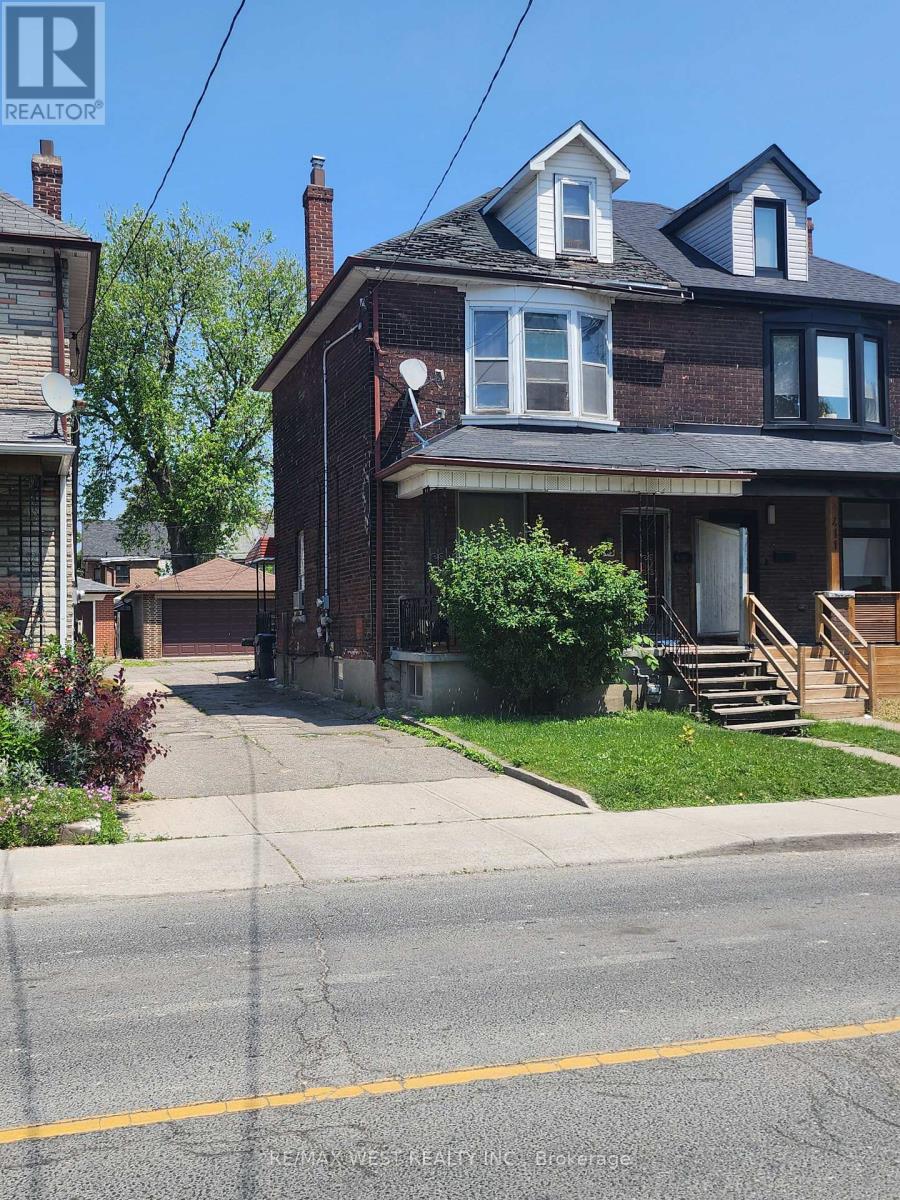
Lots in Weston-Pellam Park are standard inner-city Toronto dimensions: 20 to 30 feet wide on lots 100 to 130 feet deep. The houses are semi-detached two-storeys or brick bungalows typical of Toronto’s interwar and early postwar working-class residential construction. These are honest houses built for working families and they have the practical layouts and construction quality of that era.
The renovation spectrum here is wide. Some properties have been substantially updated by owner-occupiers who bought during the earlier phase of the neighbourhood’s repricing and invested in the properties. Others remain in original or partially updated condition. The gap between a renovated and an original-condition semi-detached on the same street can be $150,000 to $250,000 and buyers need to assess renovation costs clearly when comparing properties at different points of this spectrum.
Weston-Pellam Park has been on the repricing curve that has moved west from Roncesvalles and south from St. Clair West Village. The neighbourhood is currently in the middle of that transition: clearly more expensive than it was ten years ago but still meaningfully cheaper than the more established west Toronto communities further east. The buyer profile has been shifting from predominantly long-term community residents to a mix that includes young professional buyers who are priced out further east.
The 2022-2023 correction was felt here as across west Toronto. Prices pulled back 15 to 20 percent from peak and recovery has been gradual. Current prices are near the pre-correction level and the market is balanced. Days on market for well-priced semi-detached homes average 18 to 25 days. Multiple-offer situations occur on properties in good condition priced accurately below $1 million.
The neighbourhood is still in transition rather than arrived, meaning the retail and amenity quality on Weston Road lags behind what the Roncesvalles and Junction main streets offer. This gap is partly what keeps prices below those areas and also what buyers are implicitly betting on when they purchase: that the gap will close as the demographic mix continues to shift. That bet has been paying off for buyers who entered five to eight years ago.
The dominant buyer profile in Weston-Pellam Park is the first-time buyer in their late 20s and 30s who has been searching west Toronto for a semi-detached or detached home with streetcar access and who is not willing or able to pay the Roncesvalles or High Park premium. They are making a calculated bet on the neighbourhood’s trajectory and buying the entry-level product at the current price rather than waiting for the neighbourhood to fully arrive and paying the post-transition premium.
Long-term community residents, including second-generation Portuguese-Canadian and Latin American families, continue to buy in the neighbourhood. Their children who grew up in Weston-Pellam Park are a consistent buyer cohort returning to the community of their origin. These buyers are not making a financial speculation argument. They know the neighbourhood and they want to live in it.
Investors purchasing for rental are a smaller but present segment. The rental market in this part of west Toronto is active and the entry prices support yield calculations that more expensive areas cannot. Upper and basement suites in semi-detached properties are common and the rental income is a meaningful component of carrying cost management for buyers who set up their properties this way.
The best streets in Weston-Pellam Park are the residential streets between Weston Road and Symington Avenue, particularly those that are fully residential without significant commercial activity on the block. Pelham Avenue, Pendrith Street, and the streets running east-west through the neighbourhood have the most consistent housing stock and the best street-level character for residential living.
The streets along St. Clair Avenue West have streetcar access directly but also the noise and commercial activity of the arterial. The blocks immediately south of St. Clair are the most transit-accessible addresses but also the busiest. For buyers who use the streetcar daily, these streets minimize the walk to the stop. For buyers who drive and use transit occasionally, the interior streets one to three blocks south of St. Clair are quieter and more residential in character.
Weston Road itself is not a residential address. The commercial strip along Weston Road is the neighbourhood’s main street and has the character of a working-class commercial street in transition: some long-established Portuguese businesses alongside newer cafes and restaurants that reflect the incoming demographic. This transition is visible and interesting from a neighbourhood evolution perspective but is not the place to buy a house.
The 512 St. Clair streetcar along St. Clair Avenue West is the primary transit service for Weston-Pellam Park. The streetcar runs east to St. Clair station on the Yonge line and west to St. Clair West station on the Spadina line. From St. Clair West station, the subway provides access to Bloor-Yonge and beyond. Total trip from the northern part of the neighbourhood to downtown Toronto is approximately 35 to 50 minutes using the streetcar and subway combination.
TTC bus service on Weston Road connects the neighbourhood north toward the Weston community and south toward Davenport Road and the Junction area. The Davenport bus provides an east-west connection along the southern boundary. These bus routes supplement the streetcar service for trips that are not well served by the St. Clair corridor.
Drivers have access to the Gardiner Expressway via Keele Street south to the Queensway, and to Highway 400 and 401 via the Black Creek Drive or the Weston Road corridor. The downtown driving commute is 25 to 35 minutes from Weston-Pellam Park outside of peak hours. The neighbourhood is not as well positioned for highway access as Etobicoke, but the street network is adequate for the driving commutes that most residents make.
Earlscourt Park is the primary green space serving Weston-Pellam Park. The park occupies a full city block in the southern part of the neighbourhood and has sports fields, a community centre, a running track, and a wading pool. It is well used by the neighbourhood’s families and the community centre programs serve the Portuguese-Canadian and Latin American community with specific programming. The park is one of the better-equipped neighbourhood parks in this part of west Toronto and is a genuine community asset.
Dufferin Grove Park is accessible in a short drive or bus ride to the east and is one of Toronto’s most vibrant neighbourhood parks with a farmers market, outdoor oven, skating rink, and active community programming. Residents of Weston-Pellam Park use it regularly and it serves as a more destination-oriented park option compared to the more basic Earlscourt Park.
The Humber River trail is accessible from the western edge of the neighbourhood via Keele Street and the bridge over the Black Creek corridor. The trail connection is not as immediate as in Etobicoke neighbourhoods adjacent to the Humber, but it is accessible in a 15 to 20 minute walk or a short cycling trip. The broader Black Creek trail system, running north from the Junction area, is accessible from the southern part of Weston-Pellam Park and provides additional linear trail access.
Weston Road is the neighbourhood’s commercial spine and its present state is an accurate indicator of where the neighbourhood sits in its transition. Long-established Portuguese bakeries and Latin grocery stores that have been operating for decades share the strip with newer coffee shops, a few independently run restaurants, and the standard service retail of a west Toronto neighbourhood commercial street. The strip is more functional than destination at this point in the neighbourhood’s evolution.
St. Clair Avenue West to the north has a more active commercial strip, particularly as you move east toward the St. Clair West Village area. The stretch of St. Clair between Runnymede and Bathurst has improved significantly over the past decade with better restaurants and specialty retail. For residents of Weston-Pellam Park who walk five minutes north to St. Clair Avenue, the commercial options are substantially better than the Weston Road strip alone suggests.
Grocery options are available along both St. Clair and Weston Road at a functional level. The Portuguese grocery stores on Weston Road carry specialty items that mainstream grocery chains do not and are valued by the long-term community residents. Mainstream grocery for a broader selection is a short drive or streetcar ride east to the Bloor and Dufferin or Roncesvalles areas.
Weston-Pellam Park is served by the Toronto District School Board and the Toronto Catholic District School Board. The neighbourhood’s schools reflect the community character: established working-class west Toronto schools with diverse student populations. Public elementary students attend schools including Earlscourt Junior and Middle School, which has served the neighbourhood for decades. Secondary students at the public board attend Humberside Collegiate or other west Toronto secondary schools depending on address.
Catholic students are served by TCDSB schools including St. Mary of the Angels Catholic School at the elementary level, with secondary students attending Catholic schools in the west Toronto area. The Catholic school system has a strong presence in Weston-Pellam Park reflecting the community’s predominantly Catholic heritage from the Portuguese and Latin American immigrant traditions.
The school catchment question in this neighbourhood involves the distinction between schools serving the current community and those in adjacent neighbourhoods that some buyers specifically target. The Roncesvalles and Swansea school catchments are slightly east and south respectively and include schools with strong reputations that some Weston-Pellam Park buyers try to access through proximity. School boundary verification at the specific address is essential for families where this matters.
Weston-Pellam Park is in the middle of a gradual transition that has been underway for 10 to 15 years and is likely to continue for another decade or more. The transition is driven by affordability pressure from the east: buyers who would have bought in Roncesvalles five years ago are now looking in Weston-Pellam Park, and buyers who would have been in Weston-Pellam Park are moving to the communities further west and north that are earlier in their own transitions.
The St. Clair Avenue West corridor has seen mid-rise development along the streetcar route that has added condo units and ground-floor retail activity. This development has improved the street-level experience along St. Clair through the neighbourhood and has brought additional residential population to the immediate area. The ongoing mid-rise development along transit corridors is city planning policy and will continue to improve the St. Clair frontage over time.
The character of Weston Road itself is likely to change as the demographic transition continues. The long-established Portuguese businesses will gradually give way to the kind of independent café and restaurant density that characterizes the earlier stages of neighbourhood transition in west Toronto. Whether this is viewed as an improvement depends on the perspective of the observer, but it is the direction of travel.
How does Weston-Pellam Park compare to Roncesvalles and Junction for a west Toronto buyer?
Roncesvalles trades at a significant premium: a comparable semi-detached in Roncesvalles would cost $300,000 to $500,000 more than the same property in Weston-Pellam Park. The Junction is closer in price but still typically $150,000 to $300,000 higher for comparable properties. The price differences reflect the more complete transition of those neighbourhoods, their better-developed commercial strips, and their established reputations. Weston-Pellam Park buyers are getting the location advantage, streetcar access, and urban character of west Toronto at an earlier stage of the commercial and amenity development cycle. Whether that trade-off is worth it depends on how much the buyer values the current amenity quality versus the entry price. Buyers who have bought in Weston-Pellam Park over the past five to ten years have generally felt the trade-off worked in their favour as prices have moved toward the Roncesvalles and Junction levels, though not yet reached them.
What is the Portuguese and Latin American community character like today?
The first generation of Portuguese and Latin American immigrants built this neighbourhood over 50 years and that heritage is visible in specific businesses, churches, and community organizations that are still operating. The demographic is shifting as the original generation ages and some sell properties that their children do not purchase in the neighbourhood. Newer community members from diverse backgrounds have moved in alongside the long-term residents. The Portuguese bakeries and Latin grocery stores that define the Weston Road strip are genuine, long-operating businesses rather than heritage recreations. For buyers who value authentic neighbourhood character and community history, Weston-Pellam Park has something real. For buyers who value the community purely for gentrification investment purposes, the existing cultural character is simply the prior condition that is being replaced by the incoming demographic.
Is the Earlscourt Park area safe and how active is the community?
Earlscourt Park is an active, well-used neighbourhood park with city-operated programming and a community centre attached. The park and its immediate streets are generally safe and family-oriented. The neighbourhood as a whole has improved in street safety over the past decade as the demographic transition has brought higher-income residents to areas that previously had issues. Like any west Toronto working-class neighbourhood in transition, specific streets and blocks vary in character and buyers should walk the specific streets at different times of day before purchasing rather than relying on aggregate neighbourhood assessments. The streets closest to Earlscourt Park in the central-north section of the neighbourhood are among the most settled and community-oriented in Weston-Pellam Park.
What is the best use of the basement in a Weston-Pellam Park semi-detached?
The standard semi-detached in this neighbourhood has a basement with a separate entrance from the side or rear of the property. Developing this into a legal secondary suite generates rental income of $1,400 to $1,800 per month depending on size and finish. The development cost for a proper legal basement apartment, which requires egress windows, fire separation at the ceiling, dedicated HVAC connections, and minimum ceiling height, runs $30,000 to $60,000 depending on the existing condition. The payback period on this investment at current rents is four to seven years. Many buyers in Weston-Pellam Park factor the basement suite income into their carrying cost calculations when making a purchase decision. For first-time buyers trying to make the mortgage work, the basement income can be the difference between a property being affordable and not. The City of Toronto’s as-of-right secondary suite permissions make most standard semi-detached basements eligible for a legal suite, though the specific requirements depend on the existing condition.
Weston-Pellam Park is a neighbourhood where the right entry price matters more than in more established markets. Because the neighbourhood is still in transition, the range between a well-positioned, well-priced property and an overpriced one is wider than in more mature markets, and the time on market for overpriced properties is longer. Buyers who have a clear sense of what the comparable sales support are in a strong position to negotiate in a way that the Roncesvalles or Junction buyer cannot.
The school catchment question is the most common piece of due diligence that buyers in this neighbourhood miss. The assumption that being near a certain school means attending it is wrong. The specific address determines the catchment and this needs to be verified before relying on a school as a reason to purchase on a specific block.
We cover Weston-Pellam Park and the St. Clair West corridor. If you want to understand which streets represent the best combination of price, condition, and community character right now, reach out.
Street-level knowledge is hard to find online. Our team works in Weston-Pellam Park every day. They know which pockets hold value, where the school catchment lines actually fall, and what the market is doing right now. Talk to us before you make a decision about Weston-Pellam Park.
Talk to a local agent For Sale
 For Rent
 For Rent
 For Sale