

Weston is one of the oldest communities in Toronto, a former village on the Humber River with a historic commercial core on Weston Road, Victorian-era homes alongside postwar housing, and direct GO train access to Union Station in under 25 minutes via the Kitchener line. It offers some of the most historically interesting housing stock in northwest Toronto at working-class prices.
Weston is one of the oldest communities in what is now Toronto, with roots as a distinct village on the Humber River that predate the city by generations. The original Weston Road, running through the heart of the neighbourhood, still has the bones of its village origins: heritage commercial buildings, older residential stock alongside postwar houses, and a streetscape that carries more architectural history than most of Toronto’s postwar residential neighbourhoods. This history doesn’t make Weston expensive; it makes it interesting in a way that most of the other northwest Toronto working-class communities simply aren’t.
The neighbourhood extends along the Weston Road corridor from Lawrence Avenue West north toward Sheppard Avenue West, with the Humber River forming a natural western boundary and the Canadian Pacific rail corridor bounding it to the east. It’s a long, relatively narrow neighbourhood, and the character varies along its length: the southern end near Lawrence has more established residential quality; the northern sections are more mixed in character.
What’s changed the Weston story fundamentally is transit. The Weston GO station on the Kitchener line now provides frequent service to Union Station, with trains running roughly every 15 to 30 minutes during peak periods and reaching Union in under 25 minutes. This connection has already changed who’s buying in Weston, and it has started to change what the neighbourhood looks like and how it functions. The buyers arriving on the strength of the GO access are different from the buyers who were here before, and their investment in properties and the neighbourhood is beginning to accumulate in visible ways.
Weston is a genuinely compelling case for buyers who think independently about value. It has history, it has a Humber River location, it has GO rail access to downtown, and it has prices that are still near the floor of the Toronto freehold market. The reasons it hasn’t already appreciated as sharply as Mount Dennis relate partly to its more complex history and partly to the time it takes for transit investment to fully register in market behaviour. For buyers willing to look honestly at what’s there, rather than at what the received wisdom says about the area, Weston is one of the most interesting value positions in Toronto today.
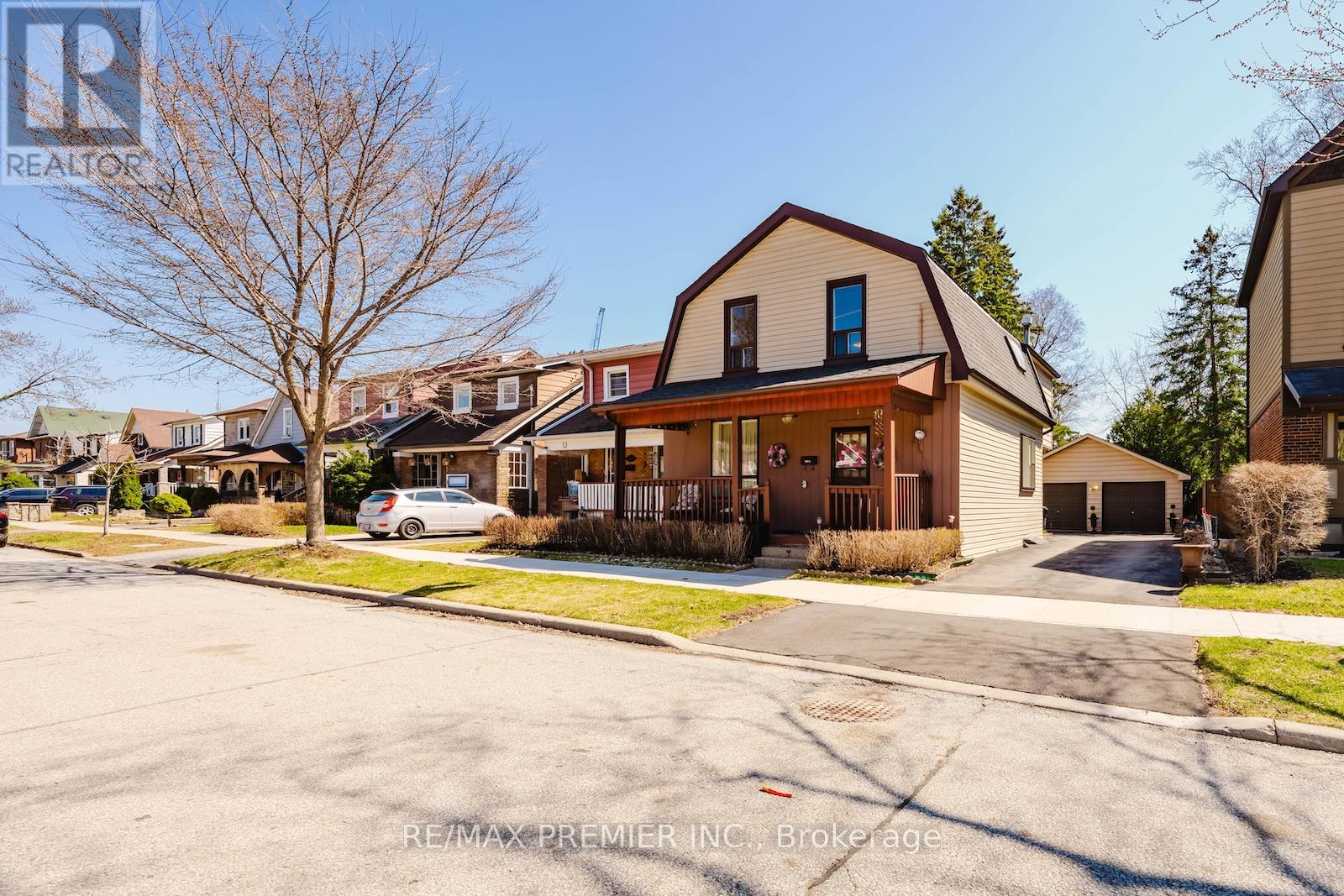
Weston’s housing stock is more varied than the standard postwar bungalow inventory that dominates most northwest Toronto working-class neighbourhoods. The older sections of the neighbourhood near the Weston Road commercial core include pre-war two-storey homes, Victorian-era workers’ cottages, and early 20th century residential construction that gives certain streets a character you don’t find in Keelesdale or Fairbank. These older homes typically have narrower lots, more architectural detail, and in some cases original features like wood trim, original plaster, and heritage-style windows that buyers with an interest in character homes find attractive.
The postwar housing stock, which makes up the majority of the neighbourhood’s residential inventory, follows the same bungalow and two-storey format found throughout northwest Toronto: brick construction, full basements, 25 to 35 foot lots, 100 to 120 foot depths. This stock is in generally similar condition to what you’d find in Fairbank or Keelesdale, ranging from well-maintained updated properties to original condition deferred-maintenance houses.
The pre-war heritage character homes are the most distinctive element of the Weston inventory. A buyer who wants a Victorian-era detached house with original architectural details, in a working-class Toronto neighbourhood, at an affordable price, will find that Weston is one of the few remaining places in the city where that combination exists. These homes require attention to heritage maintenance practices, and they often come with specific building challenges (lead paint, original knob-and-tube, unreinforced foundations in some cases) that newer construction doesn’t have. But for the right buyer, they’re genuinely special.
In 2026, detached properties in Weston trade in the $800,000 to $1.2 million range. Original postwar bungalows at the lower end, renovated or heritage character homes at the upper end. Semis run $700,000 to $900,000. The heritage homes represent the top of the market in terms of price and uniqueness. The price range is similar to Mount Dennis, and the comparison between the two is instructive: Weston offers more housing character and more architectural variety in exchange for a slightly longer transit story to downtown on surface routes, offset by the GO rail access.
The Weston market is active and has become more competitive over the past several years as the GO train access has attracted buyers who previously weren’t looking here. Well-priced, well-presented properties in good condition, particularly those within walking distance of the Weston GO station, now generate real competition. This is a meaningful shift from the market dynamics of five to ten years ago, when Weston was largely overlooked and properties sat without competition for weeks.
The investor presence has grown alongside end-user demand. The combination of low entry price, rental income potential from basement apartments, and GO access to downtown creates conditions that both buy-to-rent investors and owner-occupant house hackers find attractive. The investor competition is most intense on properties with clear income configurations: a house with a legal or near-legal basement apartment in good condition will draw competing offers that include investors offering firm.
Heritage character homes in the village core represent a distinct market segment. They attract a different buyer profile from the standard postwar bungalow buyer, and they’re scarce enough that when one comes to market in good condition it sometimes attracts buyers from outside the neighbourhood who specifically seek this product type. The prices on the best heritage homes have been rising as the renovation and character-home buyer market has expanded across Toronto. A well-done Victorian restoration on a good Weston Road side street can now achieve prices that would have been inconceivable in this neighbourhood a decade ago.
Properties that have significant issues or are clearly overpriced still sit, which is a useful signal for buyers: this is a market where the seller’s expectation and the buyer’s assessment of value don’t always align, and patience on the buyer side is still rewarded. An agent who tracks the market carefully and knows which properties have been overpriced and reduced, versus which are genuinely newly priced, helps buyers navigate this dynamic without overpaying.
The buyers choosing Weston today fall into identifiably different groups, more so than in most working-class Toronto neighbourhoods. The first and largest group are the GO commuter buyers: people who work downtown, who have run the numbers on a 20-minute GO train versus a 45-minute bus-and-subway combination from other west Toronto neighbourhoods, and who find the math compelling at Weston’s price point. These buyers are typically first-time or second-time buyers who are specifically optimising on the commute-to-cost ratio and are comfortable accepting a neighbourhood that is still evolving.
The second group are character-home buyers: people who want an older, pre-war home with architectural interest and who have found that Weston is one of the few places in Toronto where that product exists at a non-premium price. These buyers often come from outside the immediate neighbourhood and are specifically searching for Victorian or Edwardian residential character in the context of a working-class, affordable-ish community. They usually know Weston well before they buy and have made peace with its current character.
The third group are the community buyers: Caribbean Canadian, Black Canadian, and more recently South Asian and African families who have community ties to Weston going back one or more generations. For these buyers, Weston is home before it’s a real estate calculation, and they bring a continuity to the neighbourhood’s social fabric that the newer arrivals depend on even when they don’t fully recognise it.
All three groups share an unusual characteristic: they’ve typically made a deliberate and informed decision to buy in Weston rather than a default one. This self-selecting quality means the buyer pool tends to be more committed to the neighbourhood than the average, which bodes well for the community’s trajectory. Buyers who arrive knowing what they’re getting into tend to stay and invest, which is a meaningful driver of long-term neighbourhood stability.
The Weston Road commercial and residential corridor is the spine of the neighbourhood and it’s worth understanding as a street in its own right, not just as a location reference. The Weston Road heritage commercial buildings between Lawrence Avenue West and the Humber River represent some of the more interesting older streetscapes in northwest Toronto. Victorian-era three-storey commercial buildings, heritage churches, and the physical remnants of the original village create a streetscape that has no equivalent in the surrounding area. Living near this core puts you within walking distance of that character, which is part of what heritage buyers specifically seek.
The side streets running east and west off Weston Road in the southern section of the neighbourhood, between Lawrence and John Street, are the most desirable residential streets in Weston. These streets have the older housing stock, the larger trees, and the established residential quality that defines the neighbourhood at its best. Streets like Church Street, King Street, and the smaller residential blocks in the historic village core carry a character that’s genuinely different from the standard postwar residential grid.
The northern sections of the neighbourhood, above the John Street area and toward Sheppard Avenue, have a different and less historically interesting character. This is where the postwar residential development is most uniform and where the street quality is most comparable to other northwest Toronto working-class neighbourhoods. These streets are cheaper per square foot than the village core streets, and for buyers who don’t specifically value the heritage character, they provide similar housing at a modest discount.
The Humber River boundary to the west is a consistent asset across the neighbourhood. Properties with ravine views or with proximity to the Humber River trail are premium within the Weston context, and they compare favourably to similar positions in Lambton or the Old Mill area at lower price points. Buyers who are specifically attracted by water and trail access should focus on the western edge of the neighbourhood where this asset is most directly accessible.
The Weston GO station on the Kitchener line is the neighbourhood’s defining transit asset. Kitchener line trains run to Union Station in under 25 minutes during peak periods, with service roughly every 15 to 30 minutes at rush hour. The GO service is not as frequent as a subway line and off-peak service is more limited, but for buyers who commute downtown on a predictable weekday schedule, the GO train from Weston is one of the faster downtown connections available at this price point anywhere in Toronto. This is the core of the transit argument for Weston, and it’s genuinely compelling.
The Eglinton Crosstown LRT is accessible from the southern part of Weston via the Mount Dennis and Keelesdale stations, both reachable by bus from Weston Road. For trips along the Eglinton corridor rather than to downtown, the Crosstown provides east-west rapid transit access that residents in the northern part of the neighbourhood would access by first taking a bus south to the Eglinton corridor. This is a two-transit-leg trip, which is a real inconvenience for some users and irrelevant for others depending on their specific travel patterns.
The 89 Weston Road bus runs north-south along Weston Road, connecting to Lawrence Avenue West and northward to Sheppard Avenue. It provides local connectivity within the neighbourhood and connections to the broader north-south transit network. The 52 Lawrence West bus provides an east-west connection at the southern end of the neighbourhood, running toward Bathurst and the Yonge-University subway line.
Driving from Weston is straightforward. Highway 400 is accessible via Weston Road or Jane Street to the north, and from the 400 the whole 400-series highway network is within reach. The 401 interchange is minutes away via the 400. For buyers who commute by car to locations in the northwest GTA or to the airport, Weston’s highway access is excellent and the proximity to the 400 is a genuine practical advantage over more centrally located Toronto neighbourhoods.
The Humber River is Weston’s major natural asset and it’s a significant one. The Humber River Recreational Trail runs along the river through and adjacent to the neighbourhood, connecting south all the way to Humber Bay on Lake Ontario and north through the Humber Valley to Woodbridge and beyond. This is one of the longest and most continuous natural trail corridors in the Greater Toronto Area, and Weston residents have access to it at a price point far below what it would cost to live adjacent to the same trail further south in Lambton or Old Mill.
The Humber Valley in this section retains genuine natural character: wooded slopes, river meanders, and a trail system that provides real recreational value for runners, cyclists, and walkers. James Gardens, the formal garden on the Humber River bank just south of Weston, is one of the more beautiful and undervisited parks in Toronto. Weston Lions Park provides active recreation space within the neighbourhood, with sports fields and facilities serving the local community.
The Cruickshank Park area, accessible via the Humber River trail to the south, provides additional open space. The Humber River flood plain in this section is subject to TRCA regulation, as throughout the Humber corridor, and properties immediately adjacent to the river or on the flood plain have the associated regulatory constraints. Buyers considering ravine-adjacent or riverfront-adjacent properties should verify TRCA regulation status as part of their due diligence.
For a neighbourhood at this price point, the natural amenity access in Weston is exceptional. The combination of the Humber River trail, James Gardens, and the broader valley system provides a quality of outdoor recreation that buyers in much more expensive neighbourhoods pay a premium for. This is one of the most underappreciated assets in the Weston value proposition, and buyers who use outdoor amenities regularly find it one of the principal reasons they’re glad they chose this neighbourhood.
The Weston Road commercial strip is the neighbourhood’s main retail and dining corridor, and it has the advantage of its village origins: a mixture of historic commercial buildings, long-established local businesses, and the newer businesses that arrive as a neighbourhood attracts new residents. The strip includes West Indian and Caribbean bakeries and restaurants that are some of the best in Toronto, independent food shops, a range of service businesses, and the commercial fabric of a community that has been doing business on this street for over a century.
The food on Weston Road is genuinely good and worth noting separately. Caribbean patties, Jamaican jerk, West Indian roti, and the broader spectrum of Black Canadian food culture are present on this street in authentic form that is not a sanitised or upscale version of the real thing. For residents who appreciate this food culture, Weston Road delivers it without the self-consciousness of a gentrified version.
For mainstream retail and grocery, the Weston Road strip is supplemented by the broader commercial network accessible by car. A Shoppers Drug Mart, grocery stores, and the commercial services of the Lawrence Avenue West and Jane Street corridors are all within a short drive. Yorkdale Shopping Centre is under fifteen minutes by car, making it one of the more accessible major shopping destinations for Weston residents. This combination of local cultural retail and accessible mainstream shopping is actually better than many Toronto neighbourhoods in the same price range offer.
As the GO station attracts more professional commuter buyers to the neighbourhood, the commercial strip on Weston Road is beginning to evolve. New cafes, a few independent restaurants, and some of the early-stage commercial signs of neighbourhood change have appeared in the station area. This process will take years to fully unfold but it is underway, and buyers who are purchasing now are getting a neighbourhood that is changing rather than one that has already changed and priced in the change.
Weston’s schools serve a student population that reflects the neighbourhood’s demographics: diverse, multilingual, with significant proportions of students from Caribbean Canadian, Black Canadian, and newer immigrant families. The Toronto District School Board schools in the area include Weston Memorial Junior Public School and Humber Valley Village Junior Middle School for younger students, and the feeder pattern to secondary school typically leads to York Memorial Collegiate Institute or other TDSB secondary schools in the area.
Weston Collegiate Institute is the secondary school with the most direct historical connection to the neighbourhood and has served as the local high school for Weston students for generations. Its current status and program offerings should be verified directly with TDSB, as school configurations in this part of the city have been subject to review and adjustment over the years. Parents whose secondary school choice is a priority should check current catchment assignments and program availability before assuming any particular school assignment.
The Toronto Catholic District School Board operates St. John the Evangelist Catholic School for elementary students in the neighbourhood. Secondary Catholic students from Weston typically attend Father John Redmond Catholic Secondary School, which serves the broader Etobicoke and northwest Toronto TCDSB area. French immersion and specialty programs within both boards are accessible through application processes that are separate from the general catchment assignment.
As with other northwest Toronto neighbourhoods in this guide, buyers for whom school quality is a central decision factor should investigate directly rather than relying on aggregate ratings. The schools in this area serve complex urban student populations, and the range of student experience within any given school varies widely depending on the specific programs and streams a student accesses. Visiting schools, talking to parents in the neighbourhood, and having a direct conversation with school administration about the programming options relevant to your child’s needs will give you more useful information than any ranking website can provide.
The GO expansion and the Crosstown’s construction have already changed Weston’s development context, and the implications are continuing to unfold. Metrolinx’s investment in the Weston GO station area, including platform improvements and the physical connection to the adjacent transit infrastructure, signals that this node is a priority in the regional transit network. Development applications have been filed for sites in the Weston GO station area, and the City of Toronto’s planning framework for the area anticipates the station as a transit-oriented development hub over the coming decade.
The historic character of the Weston Road commercial core creates both an opportunity and a constraint for development. The heritage buildings on Weston Road have heritage designation or are under heritage review, which limits the kind of demolition-and-replacement development that would otherwise be straightforward along a transit corridor. This has the effect of protecting the village character that many buyers specifically value, while also constraining the new commercial and residential supply that the station area would otherwise attract. The heritage protections are a genuine asset for buyers who value the character of the neighbourhood; they’re a mild frustration for developers and for buyers who want more retail options faster.
The Humber River flood plain management program is an ongoing investment in the natural corridor that bounds the western edge of the neighbourhood. TRCA projects to improve bank stabilization, trail quality, and natural habitat in the Humber River valley through the Weston area have been underway for years and continue. These investments incrementally improve the natural asset that is one of the neighbourhood’s genuine differentiators.
Weston is a neighbourhood where the transit investment has already been made but the development response is still materialising. Buyers who get in before the full development response arrives are in a similar position to Mount Dennis buyers of five years ago: buying a transit-served neighbourhood at prices that don’t yet fully reflect the access it provides. The heritage character of Weston means the development response will be somewhat constrained relative to a blank-slate transit node, but the fundamental transit-access story is solid and the market will continue to price it in over time.
Is Weston safe, and what’s the honest picture on crime? Weston has had a higher-than-average crime rate by Toronto comparisons, particularly in certain parts of the neighbourhood near the commercial corridor. This is true, it’s a real consideration, and it deserves a direct answer rather than a euphemism. At the same time, the neighbourhood is home to thousands of families who go about their daily lives without incident, who know their neighbours, and who describe their specific streets as safe and functional. The difference between the street-level reality and the statistical overview is that crime is not uniformly distributed across the neighbourhood: some streets and some blocks have significantly more issues than others. Walking the streets you’re considering buying on, at different times and on different days, is the right approach to calibrating your comfort level. Buyers who do this usually find that the neighbourhood’s actual character is more varied than the statistics suggest, and that the streets near the Humber River and in the historic village core have a different feel from the streets near high-density apartment buildings or the more challenged commercial sections. Visit before you decide.
What exactly does the GO train access mean for commuting? The Kitchener GO line from Weston station runs to Union Station in approximately 18 to 22 minutes on express trains during peak periods. During the peak morning window, there are trains roughly every 15 to 30 minutes. Mid-day and evening service is less frequent. Weekend service is less predictable. For someone commuting Monday to Friday on a standard schedule, the GO commute from Weston to Union Station is fast, comfortable, and reliably faster than any surface transit alternative from this part of the city. The trade-off is that the GO schedule is fixed and you’re dependent on it, whereas a subway commute is more flexible in timing. Buyers who have tried the GO commute for themselves before buying report that the experience is significantly better than they expected: a real train, a real seat, a comfortable ride, 20 minutes to Union.
What should buyers know about the heritage homes in Weston? The older pre-war homes in the village core area are genuinely interesting and some are worth a premium, but they come with specific responsibilities and challenges. Designated heritage properties have restrictions on what changes can be made to the exterior, which affects everything from window replacements to paint colour to additions. Undesignated older homes may have heritage character without formal protection, which means changes are possible but the character can also be more easily lost. Inside these homes, buyers will often find original features that are beautiful (wood trim, original plaster, wide plank floors) alongside features that require careful updating (original electrical, older plumbing, single-pane windows). Budget for a thorough inspection by an inspector experienced with older homes, and get specialist quotes for any work that involves the original fabric of the building before you commit to a price.
How does Weston compare to Mount Dennis for a buyer on the same budget? Both neighbourhoods sit in roughly the same price range and both have compelling transit stories based on the Kitchener GO line. Weston has more housing character, a historic village commercial core, better natural amenity access to the Humber River, and a slightly more complex neighbourhood history. Mount Dennis has a more direct connection between the Crosstown LRT and the GO station in a single transit hub, and has received more recent planning attention and investment. For buyers who specifically commute downtown by GO and want the best possible housing character at the lowest possible price, Weston arguably delivers more for the money than Mount Dennis on the housing side. For buyers who want the cleaner transit hub story and are indifferent to housing character, Mount Dennis is the tighter package. Most buyers end up choosing based on which specific properties come to market when they’re actively looking, and which neighbourhood they personally connect with after visiting both.
Buying in Weston requires an agent who takes the neighbourhood seriously as a specific market rather than treating it as interchangeable with the other northwest Toronto working-class neighbourhoods. The heritage element alone requires a different level of knowledge: understanding which properties have designation, which are on the heritage register without designation, and what the practical implications are for renovation and improvement is essential. An agent who has bought and sold in the Weston village core area will give you information that a general Toronto agent can’t.
The GO station proximity premium is a specific calculation your agent should help you run on every property you’re considering. Walking time to the Weston GO station varies significantly across the neighbourhood, and the transit argument that justifies the price is strongest for properties within 10 to 15 minutes on foot of the station. Properties at the northern end of the neighbourhood, near Sheppard, require a bus connection to the station and the transit premium is accordingly less direct. Your offer price should reflect where on the transit-access spectrum a specific property sits.
TRCA flood plain due diligence applies to Weston properties near the Humber River with the same significance as in Lambton. The Humber River valley through Weston has regulated areas, special policy areas, and conservation authority permits that affect properties adjacent to or near the river. Check TRCA regulation mapping before making offers on properties in the western portions of the neighbourhood, and confirm what the regulatory situation means for your specific plans. An agent who routinely buys in ravine-adjacent Toronto neighbourhoods will have the TRCA check built into their standard process.
The heritage character homes require a specific due diligence process that a standard home inspection doesn’t always cover. Consider a specialist pre-inspection by a building professional with experience in pre-war Toronto residential construction for any property built before 1940. The issues specific to older construction, including foundation type and condition, original masonry condition, plaster and lath in the walls, and lead-based paint and asbestos in older renovation layers, are best assessed by someone with specific experience rather than a general-purpose inspector. The cost of the specialist inspection is small relative to the cost of discovering a major issue after closing.
Street-level knowledge is hard to find online. Our team works in Weston every day. They know which pockets hold value, where the school catchment lines actually fall, and what the market is doing right now. Talk to us before you make a decision about Weston.
Talk to a local agent For Rent
 For Sale
 For Rent
 For Sale