
Willowdale East is a residential North York neighbourhood east of Yonge Street, defined by post-war bungalows, a strong East Asian community, and walking-distance access to the Sheppard-Yonge subway interchange. Detached houses trade between $1.4M and $2.2M+ in 2026 on lots large enough to redevelop.
Willowdale East sits in the residential heart of North York, east of Yonge Street between Sheppard Avenue and Steeles Avenue. It’s a neighbourhood of post-war bungalows and quiet tree-lined streets that backs one of the most transit-connected corners of the city. The Yonge-Sheppard subway interchange is a short walk west. The condos of North York Centre rise along Yonge, but step a block or two east and you’re in a different city entirely: wide lots, detached houses, kids on bikes, neighbours who’ve lived on the same street for thirty years.
The community here has shifted significantly over the past two decades. Willowdale East now has one of the highest concentrations of East Asian residents in North York, with Korean, Chinese and Japanese families making up a large share of the population. That shows up in the restaurants along Sheppard, in the language of the signs, in the cultural centres and churches. It’s a genuinely multicultural neighbourhood, not a marketed one, and that makes daily life here feel particular in a way that generic North York suburbs don’t.
Buyers come here because they want subway access without paying Yonge Street condo prices, a house on a real lot within reach of good schools, and a neighbourhood that functions. The bungalows here are practical and honest. Many haven’t been touched in decades and sit on lots big enough to redevelop. Others have been renovated top to bottom and show what this housing type can become with investment. Either way, you’re buying land in a city that doesn’t make more of it.
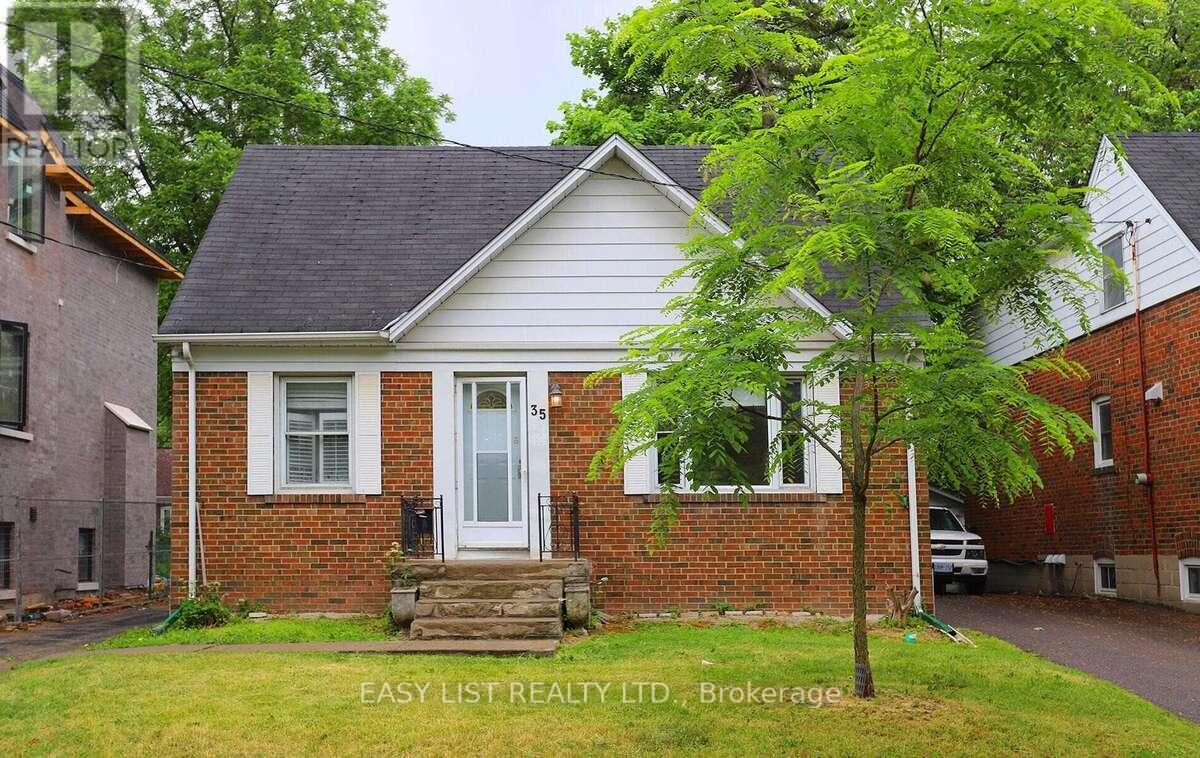
The dominant housing type in Willowdale East is the post-war bungalow, typically built between 1950 and 1970 on lots of 40 to 50 feet wide. These are solid brick houses with basements, usually three bedrooms on the main floor and a basement that’s been converted to additional living space or a rental suite. Lot depths run 110 to 130 feet on many streets, which is what makes them interesting to builders and long-term holders alike. You’re buying a lot that can accommodate a much larger house if you choose to rebuild, or a basement apartment that offsets your carrying costs if you don’t.
Detached bungalows in Willowdale East were trading in the $1.4 million to $2.2 million range in 2026, depending on lot size, renovation level and specific street. The condition range is wide. An unrenovated original with dated finishes on a 45-foot lot is a very different purchase from a fully rebuilt custom home on a 50-foot lot three blocks away, and prices reflect that. Buyers who know the area know which streets command premiums and why.
There are also some semi-detached properties and a small number of newer infill houses, built in the 2000s and 2010s on lots where the original house was torn down. These tend to be larger, with better layouts for modern families, but they don’t have the lot value upside of the original bungalows. The condos along Yonge and Sheppard are technically adjacent but are their own market. Most buyers targeting this neighbourhood are specifically looking for freehold ground-level living, not high-rise units. If you want a condo, you have plenty of options nearby. What Willowdale East offers that the condo towers don’t is a backyard, a driveway, and a house that’s yours from foundation to roof.
Willowdale East is a market that moves. Because so much of the housing stock is similar in type, lot size and age, prices here are directly comparable and buyers can quickly see when something is priced right. An unrenovated bungalow in average condition tends to attract offers from both end-users who plan to renovate and builders who plan to tear down, which creates reliable floor pricing. The teardown floor has held up even when the broader Toronto market has softened, because the land is simply worth what it’s worth regardless of the structure sitting on it.
The properties that sell fastest are the ones with clear appeal in one direction or the other: either a well-renovated house that a family can move into immediately, or an original bungalow on a large lot where the economics of redevelopment are obvious. The in-between properties, partially updated or oddly configured, sit longer. That’s useful to know as a buyer. If something has been on the market for four to six weeks in this neighbourhood, there’s usually a reason, and it’s worth understanding what it is before making an offer.
Multiple-offer situations on well-positioned freehold properties have been a feature of this market in strong conditions, with offer dates set a week after listing. In slower markets, that formality relaxes and negotiation becomes more straightforward. The 2024 and 2025 period saw more buyer leverage than the preceding years, with some properties selling below list and conditional offers being accepted. That window may or may not persist into 2026. Either way, the fundamental demand drivers here, namely subway proximity, school catchments and lot value, remain intact.
Most buyers targeting Willowdale East are families with children, or families planning to have them. The school access is a major draw, particularly for families who value academic performance and are paying attention to EQAO scores and program offerings at the local secondary schools. Earl Haig Secondary School in particular carries a strong reputation, and its catchment brings buyers to the neighbourhood who might otherwise have looked further south or west.
A significant portion of buyers in this neighbourhood are East Asian families, many of them recent immigrants or first-generation Canadians, who appreciate both the community infrastructure that already exists here (Korean grocery stores, Japanese restaurants, Mandarin-speaking schools and services) and the neighbourhood’s proximity to the financial district via the Yonge subway line. Working in downtown Toronto while living in a house with a yard and a basement is a practical arrangement, and Willowdale East makes that arrangement affordable relative to most of the rest of the city.
There’s also a meaningful group of buyers who grew up in this neighbourhood and are returning as adults, often to be near aging parents who still live on the same streets they’ve occupied for thirty or forty years. And there are downsizers from larger properties further north who want to stay east of Yonge, stay close to their community, and buy into a smaller house without moving to a condo. The neighbourhood accommodates all of these buyers because its housing stock is varied enough in condition and price to offer genuine options across different life stages and budgets within the freehold category.
The best streets in Willowdale East tend to run parallel to Yonge between Sheppard and Steeles, far enough from the arterial roads to be quiet but close enough to be walkable. Maxome Avenue, Burbank Drive, Elmwood Avenue and Addington Avenue are well-established streets where the housing is consistent and the lots are good. These are streets where neighbours know each other, where houses are well-maintained, and where you’ll find families who’ve been in the neighbourhood for generations alongside newer arrivals who did their homework before buying.
Streets closer to Sheppard Avenue itself carry more noise and traffic, and the lots backing Sheppard are generally worth less than comparable lots a few streets north. The tradeoff is price: a bungalow on a street one block from Sheppard might be $75,000 to $150,000 cheaper than an equivalent on a quieter interior street. That gap is real and consistent. Buyers who can live with some road noise can buy more house for the same money.
The eastern edges of the neighbourhood, near Leslie Street and beyond, are quieter and more affordable still. Transit becomes slightly less convenient, but the neighbourhood character doesn’t change much. Streets like Kenneth Avenue and Churchill Avenue have solid bungalow stock and tend to attract buyers who want the neighbourhood’s community character without the premium for the closest-to-subway addresses. The pockets nearest Bayview Avenue also have some larger lots and a slightly different built form, with a mix of older and newer infill houses that runs up toward Bayview Village to the east.
Transit is one of Willowdale East’s strongest cards. The Sheppard-Yonge station sits at the southwest corner of the neighbourhood, connecting Line 1 (Yonge-University) running south into downtown and north toward Finch, and Line 4 (Sheppard) running east toward Scarborough. For most of the residential streets in Willowdale East, this station is a 5 to 15 minute walk. That’s a meaningful advantage in a city where subway access drives property values.
The Bessarion and Leslie stations on Line 4 serve the eastern sections of the neighbourhood and open up connections eastward that riders rarely need for downtown commuting but that do make Scarborough more accessible. Sheppard Avenue East has bus service running the full length of the corridor, filling in gaps between subway stations. For trips that don’t need the subway, the bus network on Sheppard and on the north-south streets handles day-to-day movement reasonably well.
Driving is straightforward. Yonge Street, Sheppard Avenue and Bayview Avenue are all accessible quickly from most streets in the neighbourhood, and the 401 is reachable in under ten minutes with normal traffic. The DVP (Don Valley Parkway) is nearby to the east via Sheppard, which opens up the eastern highway network for drivers heading north. Parking is not a problem on residential streets, and most houses have driveways. The neighbourhood was built for cars and retrofitted for transit, which means it accommodates both without friction.
Willowdale East isn’t a neighbourhood defined by green space the way some Toronto areas are, but it has functional parks and reasonable access to ravine land to the east. Earl Bales Park is nearby to the west and offers a significant natural area with trails and a ski hill. Closer to home, Sheppard Park along the west branch of the Don River provides a green corridor with walking paths that connects south toward the broader trail network.
Within the residential streets, the parks are neighbourhood-scale: playgrounds, open fields, benches, the kind of spaces that work for young children and dog walkers rather than large organized sports. Roywood Park and other smaller green spaces are distributed through the area and tend to be well-used by families in the surrounding blocks. The flat terrain of North York makes these parks accessible on foot for most ages.
The trail network connecting to the Don Valley is reachable within cycling distance, and Bayview Avenue to the east provides access to the Bayview parkland corridor. Serious cyclists and trail runners will find that getting to the main trail system requires a bit of effort from this neighbourhood, but it’s achievable without loading a bike onto a car. For families with young children who just need a place to run around in the afternoon, the local parks more than suffice. The neighbourhood isn’t selling itself on natural amenity, but it’s not lacking either. Green space here is practical rather than spectacular.
The retail along Sheppard Avenue East between Yonge and the Bayview area reflects the neighbourhood’s East Asian community character clearly. Korean restaurants, Japanese bakeries, bubble tea shops, Asian grocery stores and specialty food retailers line the commercial strips here. Hmart and other large Korean grocers are nearby, and the diversity of food shopping in this corridor is genuinely excellent. If you cook at home and value access to fresh Asian ingredients, this is one of the better-positioned neighbourhoods in the city.
North York Centre, just across Yonge Street to the west, adds considerably to the retail picture. The Mel Lastman Square area, Empress Walk mall, the Toronto Public Library’s North York branch, and a substantial concentration of restaurants and services are all within walking distance of most of Willowdale East. This is where you’d go for chain retail, banking, medical clinics, pharmacies and the broader service infrastructure that suburban life requires. The Yonge Street corridor handles the functional needs that the neighbourhood streets don’t.
For grocery shopping beyond the Asian grocers, a Loblaws and a Longos are both accessible in the broader area. The neighbourhood’s own retail footprint is modest, as it should be for a predominantly residential zone. Most commercial activity happens along the main corridors rather than embedded in the residential streets. The result is that living here is quiet, but nothing feels far. A ten-minute walk east to west across the neighbourhood covers almost every daily errand.
Schools are a primary reason families choose Willowdale East, and Earl Haig Secondary School is the centrepiece of that reputation. Earl Haig consistently ranks among Toronto’s higher-performing public secondary schools and houses the Claude Watson School for the Arts, a specialized arts program that draws students from across the city. The combination of a strong academic program and an arts stream in one building is unusual and appealing to families with diverse interests. Secondary school is the main driver, but the decision to buy in the catchment often happens years before a child is old enough to attend.
At the elementary level, the Toronto District School Board operates several schools in the area, including Cummer Valley Middle School and various elementary schools serving the different streets. The TDSB also has a French Immersion stream available at some locations, which matters to families planning bilingual education paths. The Toronto Catholic District School Board offers separate school options in the broader North York area for families who want that.
The neighbourhood’s demographic composition means there is also a significant presence of private tutoring centres and academic enrichment programs. The commercial strips along Sheppard have multiple learning centres offering math enrichment, language programs and exam preparation. This is partly a cultural norm in the East Asian community that dominates the neighbourhood, and partly a practical infrastructure that many families regardless of background end up using. Families who move here and are serious about academic outcomes find that the formal and informal educational ecosystem is well-developed.
The development story in Willowdale East plays out on two scales. At the large scale, the intensification of the Yonge-Sheppard corridor continues to add density right at the neighbourhood’s edge. New condo towers along Yonge Street and around the Sheppard-Yonge intersection have already changed what that intersection looks like, and further development is ongoing. This density is happening along the arterials, not in the residential interior, which means it adds transit ridership and retail viability without changing the character of the streets buyers are actually purchasing on.
At the small scale, the steady replacement of original bungalows with custom-built homes continues. A builder buys a bungalow on a 45-foot lot, demolishes it, and constructs a two-storey house that occupies significantly more of the lot footprint. This happens on most streets in the neighbourhood over time, and it gradually changes the streetscape. Some buyers see this as improvement: newer, larger homes tend to be better suited to modern family living. Others prefer the scale and setbacks of the original bungalows. Both views are legitimate. What matters practically is that the teardown process sustains land values and means there’s no shortage of newly built inventory for buyers who want a newer home in an established neighbourhood.
Infrastructure projects in North York Centre, including the transit-related improvements connected to the broader subway system, continue to improve the area’s long-term connectivity. The neighbourhood benefits from its proximity to these investments without being in the middle of the construction disruption. Buyers buying today are buying into a neighbourhood that will continue to evolve, and the direction of that evolution is toward more density and more amenity at the arterials and more stability in the residential interior.
Is Willowdale East worth buying into if I’m not East Asian?
Yes. The neighbourhood has a strong East Asian character, particularly along the commercial strips on Sheppard, but it’s not a closed community. Families from every background live on the residential streets, attend the schools and use the parks. What the cultural composition does mean is that the retail and food options skew heavily Asian, which some buyers see as a feature and others need to factor in. The community infrastructure is excellent regardless of your background. Earl Haig’s reputation and the transit access apply to everyone equally, and the housing market operates normally for all buyers.
What’s the difference between buying close to Sheppard and buying further north?
Streets within a few blocks of Sheppard Avenue have more traffic noise and slightly more pedestrian and commercial activity nearby. They tend to price $75,000 to $150,000 lower than equivalent houses on quiet interior streets closer to the middle of the neighbourhood, depending on the specific street and lot. Buyers who work from home or have young children who’ll be sleeping near windows often prefer the quieter northern streets. Buyers who prioritise walkability and don’t mind some noise find the Sheppard-adjacent blocks offer more value. It’s a genuine tradeoff with no universal right answer.
How realistic is it to rent out a basement suite to offset costs?
Many bungalows in Willowdale East already have basement apartments, either legal or informal. The demand for basement rentals in this area is solid, given the neighbourhood’s proximity to transit and its generally residential character. A two-bedroom basement in a typical bungalow rents for $1,800 to $2,400 per month depending on finish level and suite configuration. Legal secondary suites with separate entrances and proper egress fetch more and have fewer complications. If you’re buying an unrenovated bungalow, factoring in the cost and process of legalising a basement suite is worth doing before you submit an offer.
Is Earl Haig Secondary School guaranteed if I buy in Willowdale East?
Not automatically. Secondary school boundaries in Toronto are set by the TDSB and can be amended. Most of the residential area east of Yonge and south of Steeles falls within Earl Haig’s catchment, but boundaries can shift, and specific streets near the edges of the catchment should be verified with the TDSB directly before making a purchase decision based on school placement. The TDSB boundary lookup tool on their website lets you enter a specific address and confirm the assigned school. Don’t rely on a neighbour’s information or a listing’s description. Confirm it yourself, with the address you’re considering.
Willowdale East is a market where local knowledge matters more than average. The price differential between a well-positioned lot on a quiet interior street and a comparable house on a noisy arterial-adjacent street can be $100,000 or more, and that gap isn’t always visible from a listing. A buyer’s agent who knows the neighbourhood knows which streets have drainage issues, which blocks back onto commercial properties, and which lots have the dimensions that make future redevelopment viable. These aren’t details you can find in the listing. They come from doing deals in the area.
The school catchment question is one buyers frequently get wrong. It’s worth spending twenty minutes with your agent confirming the exact boundary for any property you’re seriously considering, rather than assuming based on general neighbourhood location. Boundaries are specific to addresses, and the consequences of getting it wrong are significant if a specific school is a primary reason for the purchase.
Conditional offers have been accepted in this market at times of softer demand, and a buyer’s agent who is actively working in Willowdale East will know the current temperature of the market well enough to advise whether a conditional offer is realistic or whether you need to be prepared to go firm. In a market with offer dates and competition, having your financing pre-arranged and your inspector on standby matters. A good agent will have working relationships with the agents who regularly list in this area and will know what’s coming to market before it does. That kind of relationship, built from ongoing work in the neighbourhood, is what you’re paying for when you work with a buyer’s agent here.
Street-level knowledge is hard to find online. Our team works in Willowdale East every day. They know which pockets hold value, where the school catchment lines actually fall, and what the market is doing right now. Talk to us before you make a decision about Willowdale East.
Talk to a local agent For Sale
 For Sale
 For Sale
 For Rent