
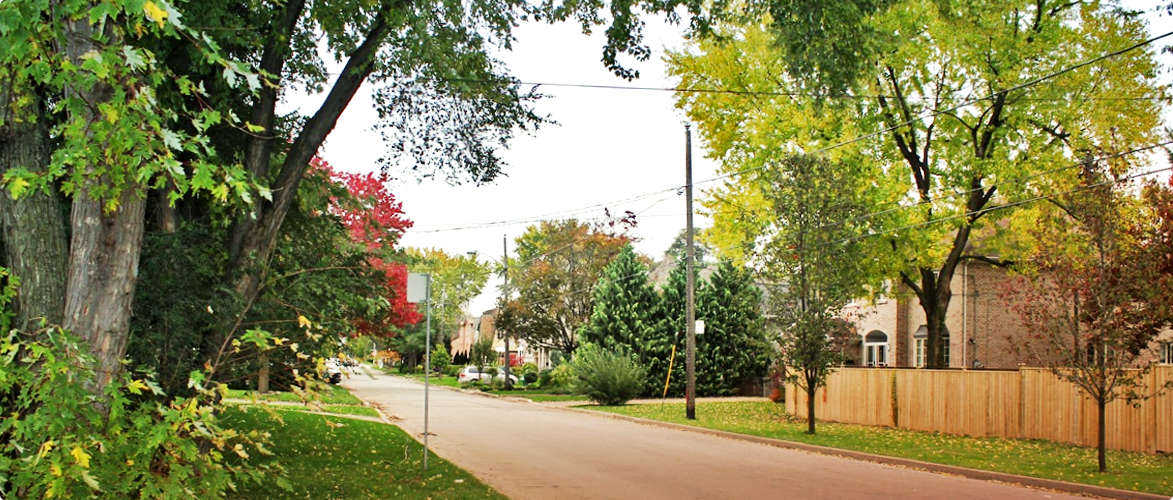
Willowdale sits at the heart of North York, built around the Yonge and Sheppard intersection where two subway lines meet. It offers exceptional transit access, a dense urban commercial core shaped by Korean and Chinese communities, and a split character: high-rise condos along the Yonge corridor and older freehold homes on the residential streets of Willowdale East.
Willowdale sits at the heart of North York, built around the Yonge and Sheppard intersection where two subway lines meet and the city’s density climbs sharply. It’s one of the few parts of Toronto where you can step off a subway platform and be surrounded by restaurants, grocery stores, banks, and cafes within a two-minute walk in any direction. That density is not incidental. It’s the defining feature of the neighbourhood, and it’s why people choose it.
The neighbourhood divides loosely along the Yonge Street spine. Willowdale East, the stretch running east from Yonge toward Bayview and beyond, carries an older residential character with mature tree-lined streets, mid-century homes, and a quieter feel despite its proximity to the transit hub. Willowdale West, on the other side of Yonge, is where the towers concentrate, where the condo market is most active, and where the Korean and Chinese commercial presence is strongest. The two sides share a postal code but feel meaningfully different on the ground.
Mel Lastman Square, the civic plaza fronting North York City Hall on Yonge Street, anchors the commercial and cultural centre. It hosts outdoor events, markets, and public gatherings through the warmer months. The Meridian Arts Centre sits nearby, bringing theatre and performing arts to a neighbourhood more often associated with transit maps than culture.
What draws buyers to Willowdale, consistently, is the combination of transit access and urban amenity that is genuinely rare outside the downtown core. For people who don’t own a car, or prefer not to use one, Willowdale functions exceptionally well. The subway ride to Bloor-Yonge takes roughly ten minutes. The Sheppard line east to Scarborough is direct. GO Transit connections are close. The neighbourhood also draws a significant Korean and Chinese community, and the retail and dining options reflect that, giving the area a commercial vitality that generic suburban nodes don’t have.
It’s not a quiet residential retreat. Street-level noise, construction, and high-rise density are all part of the picture. Buyers who come here knowing that tend to stay. Those who want a slower pace usually look east or north.
The Willowdale housing stock divides sharply between the condo towers that dominate the Yonge corridor and the freehold homes that fill the residential streets to the east and west. Understanding which market you’re entering matters, because they behave differently and serve different buyers.
Condos are the dominant product type in Willowdale West and along the Yonge Street spine. Buildings here range from older concrete towers built in the 1980s and 1990s to the glass high-rises that have gone up through the 2010s and 2020s. Older units tend to be larger in square footage but carry dated finishes and higher maintenance fees. Newer buildings offer better layouts and amenities but smaller suites. In 2026, a one-bedroom condo in Willowdale typically trades between $550,000 and $700,000. A two-bedroom in a mid-tier building runs $700,000 to $900,000. Luxury units in newer buildings or with premium views push higher. Maintenance fees vary considerably and are worth scrutinizing carefully, especially in older buildings with deferred capital work.
Freehold product in Willowdale East tells a different story. The streets east of Yonge, particularly around Doris Avenue, Beecroft Road, and the residential blocks running south from Sheppard, hold a mix of bungalows, two-storey detached homes, and a smaller number of semis. Many of the bungalows date to the 1950s and 1960s and sit on 40- to 50-foot lots. Some have been renovated to a high standard. Others are sold as-is, often for land value, with buyers planning full rebuilds. A renovated four-bedroom detached in Willowdale East typically prices between $1.5 million and $2.2 million in 2026. Custom rebuilds on good lots push above that. Lots with ravine exposure or unusual dimensions can command premiums beyond $2.5 million.
Townhomes exist in small numbers, mostly in planned complexes rather than street-front row housing. They appeal to buyers who want freehold ownership without the full cost of a detached, though supply is limited and they move quickly when they come to market.
The architectural range is wide. Buyers looking for the neighbourhood’s transit access and amenity can enter at different price points depending on whether a condo or freehold suits their situation.
The condo market in Willowdale is active and competitive, driven partly by genuine end-user demand and partly by the neighbourhood’s long-standing appeal to investors. Many units in the high-rise towers are renter-occupied, which affects building culture and resale dynamics. A building with a high investor ratio and a large rental component can be a different ownership experience than one with owner-occupiers in the majority, and it’s worth checking status certificates carefully before committing.
Freehold turnover in Willowdale East tends to be lower. Families who buy into the neighbourhood often stay for the school catchments, particularly Earl Haig Secondary School, which draws buyers who prioritize the IB program. When a well-maintained detached does come to market in a sought-after pocket, competition can be sharp, with multiple offers common in spring and fall markets. Bungalows positioned for a rebuild typically sell more quickly than their condition might suggest, because the land value is understood by buyers and agents working in the area.
Days on market for condos vary more than for freeholds. An overpriced condo in a building with known issues can sit for weeks. A well-priced suite in a building with strong management and reserves can sell in days. Reading the difference requires knowing the buildings, not just the neighbourhood, which is why local expertise matters here more than in some other areas.
Seasonal patterns apply. Spring and fall are the busiest periods. The summer market slows somewhat, though Willowdale’s density means there’s always some transaction volume. Winter listings are fewer, and serious sellers in January or February often find less competition, which can work in a buyer’s favour.
The rental market in Willowdale is strong, which supports the investment case but also means listing prices in some buildings assume rental income as the exit strategy. Buyers planning to live in their unit should approach those buildings with that context in mind.
Willowdale draws a specific kind of buyer, and it’s worth being direct about who that tends to be. The neighbourhood consistently attracts newcomers to Canada, particularly from Korea and China, who prioritize transit access, proximity to established community services, and a dense commercial environment that supports daily life without a car. The Yonge and Sheppard corridor has been a destination for Korean Canadians for decades, and that community infrastructure, the restaurants, the grocery stores, the professional services, the cultural associations, carries genuine value for buyers who want to live within it.
Young professionals are another significant buyer group, particularly those who work downtown or at the Sheppard corridor’s own office towers and want walkable urban density without paying Midtown prices. A one- or two-bedroom condo in Willowdale puts someone on two subway lines for a fraction of what the same product costs near Bloor and Yonge.
Families are present in Willowdale East specifically, drawn by the Earl Haig Secondary School catchment. Parents who prioritize the IB program and the school’s academic reputation factor it into their buying decision explicitly. The family buyer in Willowdale East is typically trading lot size or house age for the school access and the transit convenience, accepting a 1960s bungalow or a mid-century two-storey in exchange for those benefits.
Investors are a consistent presence, particularly in the condo market. Some are local, some are international. Their activity affects supply and pricing in the resale condo segment, and it means that understanding which buildings are heavily investor-held is part of doing due diligence here.
What buyers trade off to be in Willowdale is typically quiet and space. The neighbourhood’s density and transit access come with noise, construction, and a built environment that prioritizes volume over neighbourhood feel. Buyers who want parks on their doorstep and tree-lined residential calm usually find better value a few kilometres east or north.
The blocks immediately surrounding the Yonge and Sheppard intersection, within a five-minute walk of both subway stations, are the most urban and dense part of Willowdale. High-rise towers line Yonge Street between Sheppard and Empress Avenue, and the streets immediately east and west of Yonge carry significant foot traffic and retail. These blocks appeal to buyers who want maximum transit access and urban convenience and are prepared for the noise and density that come with it.
Doris Avenue and Beecroft Road, running parallel to Yonge a few blocks east and west respectively, offer a slightly different character. These streets have a mix of older mid-rise and low-rise buildings alongside townhome complexes and the occasional detached home. They’re close enough to the subway to walk, but the street-level environment is calmer. Doris in particular has seen renovation activity and carries a more established residential feel than the high-rise strips.
The residential streets east of Yonge, from Avondale Avenue down through Church Avenue, Hillcrest Boulevard, and the blocks around Bogert Avenue, are where Willowdale East’s freehold character lives. These streets were largely built out in the 1950s through 1970s and have a mid-century suburban quality. Some blocks are predominantly renovated; others still have significant numbers of original, unmodified homes. The closer to Yonge, the higher the land value and the stronger the rebuild activity.
North of Sheppard, the neighbourhood transitions along Yonge toward Newtonbrook and the character shifts. The density doesn’t drop dramatically, but the condo towers thin out somewhat and there’s more mid-rise and older apartment stock. This stretch, sometimes called North York Centre, is part of the same continuous development corridor but feels less intensely urban than the Sheppard intersection itself.
West of Yonge, around Willowdale Avenue, Greenfield Avenue, and the streets running toward Bathurst, the neighbourhood is predominantly high-rise residential. These blocks function well for renters and owners who want transit access and don’t need a house, but they have less street-level interest than the east side’s residential grid.
Willowdale’s transit situation is genuinely excellent by Toronto standards. Sheppard-Yonge station serves as the interchange between Line 1 (Yonge-University) and Line 4 (Sheppard), putting the neighbourhood on two subway lines with direct access downtown and east toward Don Mills. North York Centre station, one stop south on Line 1, serves the southern part of the neighbourhood. The ride from Sheppard-Yonge to Bloor-Yonge is approximately ten minutes. To Union Station, roughly twenty. These are numbers that matter to buyers who commute or who want to live without depending on a car.
Bus service on Sheppard Avenue East and West extends the transit reach horizontally. The 85 Sheppard East bus connects to Scarborough. Multiple north-south bus routes on streets like Yonge, Bayview, and Doris give residents options for reaching destinations the subway doesn’t directly serve. TTC surface service in this corridor is more frequent than in many suburban Toronto areas, given the density.
GO Transit is accessible from nearby stations, particularly for those connecting to the broader regional network. Oriole GO station, a short distance to the east, provides access to the Stouffville line for commuters heading to the 905 or needing an alternative to the subway.
Cycling infrastructure in Willowdale is functional rather than exceptional. Yonge Street is not a comfortable cycling corridor due to traffic and density. Side streets offer more manageable routes, and the North York trail system provides some protected riding. The neighbourhood is not a cycling-first environment, but it’s workable for riders comfortable with urban cycling.
For drivers, the 401 is accessible via either Yonge Street or Bayview Avenue in a few minutes. The Allen Road expressway runs to the west. Parking near the Yonge and Sheppard commercial core is tight and increasingly expensive, which reinforces why most residents here rely on the subway rather than a car for daily use.
Green space in Willowdale is present but not the neighbourhood’s strongest suit. The density of the Yonge corridor means that parks are smaller and more distributed than in North York’s less intensely built areas. That said, there’s enough green infrastructure within a reasonable walk to serve most residents well, particularly families with children.
Earl Bales Park, a substantial green area on Bathurst Street north of Sheppard, is one of the larger parks serving the broader North York area. It has trails, a ski hill (a modest one, but used), a disc golf course, and open parkland. It’s a ten-to-fifteen minute drive or a longer bus ride from the Yonge corridor, so it functions more as a destination than a daily amenity for most Willowdale residents.
Closer to the neighbourhood core, Mel Lastman Square provides an urban plaza rather than a natural park. It hosts events and gives residents an outdoor public space, but it’s hard surface, not green. For families with young children, the parks scattered through the Willowdale East residential grid, including parks off Church Avenue and near Bogert Avenue, are the practical daily options. They’re small by suburban standards but functional.
The Don River ravine system is accessible to the east of the neighbourhood, connecting through to the broader ravine trail network. Residents in the eastern part of Willowdale can reach ravine trails within a reasonable walk or short cycle, which gives the area a natural amenity that purely urban environments don’t have. The ravine access is less direct from the Yonge corridor but improves as you move east toward Bayview.
Cummer Park, north of Sheppard near Yonge, has a community centre and outdoor facilities including sports fields. For residents at the northern end of the neighbourhood, it’s a walkable option. Willowdale’s overall green space situation is adequate for an urban neighbourhood. It’s not the reason people move here, but it’s not a gap that forces trade-offs either.
The retail and dining scene in Willowdale is anchored by the Yonge and Sheppard commercial core and shaped heavily by the Korean and Chinese communities that have established roots here over decades. This is one of the neighbourhood’s genuine assets. The restaurants along Yonge Street, on the side streets near the subway, and in the North York Centre mall complex offer a range of Korean, Chinese, Japanese, and other Asian cuisines that is hard to match in Toronto’s northern reaches.
North York Centre, the underground mall beneath the Yonge and Sheppard complex, connects to several towers and provides daily convenience retail, food court dining, and services. Whole Foods Market operates nearby. Galleria Supermarket and H Mart serve the Korean and Asian grocery market specifically, stocking products that aren’t available in mainstream grocery chains. These are not incidental details for buyers from communities that rely on particular food products. The grocery access here is a real practical advantage.
Along Yonge Street between Sheppard and Finch, the commercial strip runs continuously, mixing chain restaurants with independent Korean barbecue restaurants, bubble tea shops, bakeries, banks, and professional offices. It’s urban in density without being polished. The streetscape isn’t particularly attractive, but the density of services is exceptional.
Hullmark Centre and the Emerald Park complex near Yonge and Sheppard added more retail and food options in recent years, including a Fresh Market grocery store and various restaurant tenants. These are walkable from the subway and serve the condo population on the west side of Yonge.
For larger-format retail, Bayview Village Shopping Centre is a short drive or bus ride east, offering higher-end retail options in a more suburban mall format. Fairview Mall in North York serves the broader area for everyday shopping. The neighbourhood itself is dense enough that most daily needs can be met on foot, which is part of its genuine appeal to buyers who want to minimize car dependence.
Earl Haig Secondary School is the dominant name in Willowdale’s school conversation, and for good reason. The school carries the International Baccalaureate program and has a competitive academic reputation that draws families specifically into the catchment. It’s located on Airdrie Road east of Yonge, and families buying in Willowdale East frequently have Earl Haig in mind as part of the purchase rationale. Admission to IB is not automatic for catchment students; there’s an application process and academic requirements. But being in the catchment is the first step, and many buyers treat it as a meaningful factor in their decision.
Willowdale Middle School feeds into Earl Haig and serves the neighbourhood’s intermediate grades. At the elementary level, several Toronto District School Board schools serve the neighbourhood, including Sheppard Public School and Churchill Public School, both drawing from the residential streets east of Yonge. Class sizes and programming vary. The better approach for buyers with specific concerns is to contact TDSB directly and confirm catchment boundaries at time of purchase, as boundaries have been adjusted over the years.
On the Catholic side, the Toronto Catholic District School Board operates schools in the area. Cardinal Carter Academy for the Arts, a specialized secondary school in the broader North York area, is a draw for students interested in arts-focused programs and accepts applicants from across the city rather than just the local catchment.
Private school options within reasonable distance include TFS (Toronto French School) on Bayview Avenue, which is among the most prominent private schools in Toronto and draws from across the city and beyond. Several smaller private schools operate in North York, and the density of tutoring and supplementary education services on Yonge Street reflects the neighbourhood’s high parental investment in academic outcomes.
French immersion programs are available through TDSB at several North York schools. Buyers with specific language or program requirements should confirm current offerings with the board, as program availability can shift.
Willowdale has been in a near-continuous state of development for two decades, and that shows no sign of slowing. The North York Centre Secondary Plan designates the Yonge corridor as one of Toronto’s primary intensification areas, which means high-rise development is not an occasional event here but an ongoing condition of the neighbourhood.
Several large mixed-use development applications have been advanced or approved along the Yonge Street corridor between Sheppard and Finch in recent years. These projects propose towers in the 40- to 60-plus storey range, adding thousands of units to an already dense area. The impact on the street-level environment, on sunlight to adjacent properties, and on local infrastructure capacity is a legitimate concern for existing residents and buyers. Construction cranes are a regular feature of the skyline here.
The Yonge and Sheppard intersection itself has seen significant change in the last decade. Hullmark Centre and Emerald Park added retail and residential density. The Teahouse condo development on Yonge brought additional high-rise units to market. Several more projects in the pipeline will continue adding supply to the condominium market over the next several years.
In Willowdale East, the development trend runs more toward custom-built infill. Older bungalows are being replaced by two- and three-storey custom homes, often with secondary suites. The streetscape in parts of the neighbourhood is evolving from mid-century modest to new construction that varies considerably in architectural quality. Laneway and garden suite development has begun appearing on larger lots as well.
The city’s ongoing Official Plan review and densification policy will likely sustain development pressure in this corridor for the foreseeable future. Buyers purchasing here should assume the neighbourhood will continue to intensify along the Yonge corridor and plan accordingly, whether that’s a building blocking a view or construction noise on a neighbouring property.
Is Willowdale East or Willowdale West the better buy? It depends entirely on what you’re looking for. Willowdale East, east of Yonge, offers freehold housing on mature residential streets with a calmer character and the Earl Haig catchment as a draw for families. Willowdale West, west of Yonge, is more heavily condominiums, higher density, and closer in feel to the transit-oriented urban core. If you’re buying a family home and value school access and a residential street, East is the typical choice. If you want condo living with maximum transit convenience and don’t need a yard, West delivers that effectively. The two sides share transit access but differ significantly in property type, price range, and day-to-day feel.
What should I check before buying a condo in Willowdale? The status certificate is essential. It contains the condominium corporation’s financial statements, reserve fund study, budget, rules, and any outstanding special assessments. In older Willowdale buildings, deferred maintenance and underfunded reserves are real issues. You want to know whether the reserve fund is adequately funded before you buy. Also check the investor-to-owner-occupier ratio in the building. A building where most units are rented out has a different ownership culture than one with a majority of owner-occupiers, and it can affect building management quality, noise, and how well common areas are maintained. Have a real estate lawyer review the status certificate before you waive conditions.
How competitive is the Earl Haig Secondary School catchment? The catchment drives real demand in Willowdale East, and it’s a factor that agents and buyers both understand. Homes in the catchment area do attract buyers who list the school specifically as a reason for purchasing. That said, Earl Haig’s IB program requires a separate application and has academic prerequisites, so being in the catchment is a prerequisite for applying, not a guarantee of admission. Buyers should confirm current catchment boundaries with TDSB directly, since boundaries have changed over the years and the address matters, not the neighbourhood name.
Is Willowdale a good investment as a rental property? The rental market is strong, occupancy rates are high, and proximity to two subway lines keeps demand consistent. That said, condo investor returns in Willowdale have compressed as purchase prices have risen faster than rents in some building types. Older buildings with lower purchase prices but higher maintenance fees require careful calculation. New builds being sold pre-construction carry substantial risk from the gap between pre-sale price and eventual market value at completion. Anyone buying specifically to rent should run the numbers carefully using current rental comps rather than projections.
What are the main things that surprise buyers after they move in? Most commonly: noise, construction activity, and the pace of change. The Yonge corridor is loud during construction periods, which in this neighbourhood can mean years at a time. New towers going up nearby can affect sunlight to low-rise properties and change the visual character of streets. Traffic congestion at the Yonge and Sheppard intersection is significant during peak hours. Buyers who’ve researched the neighbourhood carefully and visited at different times of day tend to handle these realities well. Those who only visited on a quiet Sunday afternoon sometimes find the weekday reality jarring.
Buying in Willowdale requires a buyer’s agent who knows the specific buildings, not just the neighbourhood. In the condo market especially, building-by-building differences matter more than street-by-street differences. Two towers on the same block can have meaningfully different reserve fund health, management quality, rental ratios, and resale history. An agent who’s been through multiple status certificates in this area and can recognize the warning signs is worth having. One who’s only worked in the neighbourhood occasionally will be slower to flag issues that an experienced local agent catches immediately.
For freehold buyers in Willowdale East, the key due diligence issues are lot size and configuration, school catchment confirmation, and the condition of the home relative to what comparable renovated properties have sold for. The rebuild market here means many listings are priced partly on land value. Understanding whether you’re paying for a liveable home or effectively paying for land and planning a renovation is a question a buyer’s agent should help you answer clearly before you make an offer.
Offer dynamics in Willowdale vary by property type. Freehold homes in the Earl Haig catchment, when priced well and presented properly, can attract multiple offers. The condo market is more transactional and less emotionally competitive, though well-priced units in sought-after buildings still move quickly. Your agent should be honest with you about which situation you’re walking into so you can make a clear-headed decision about strategy.
Development and zoning context matters more in Willowdale than in most Toronto neighbourhoods. If you’re buying a low-rise property adjacent to a site with development potential, your agent should be able to tell you what’s been applied for, what’s been approved, and what the implications are for your property. The city’s planning portal and the Ontario Land Tribunal hearing registry are worth checking for any site near a major arterial. This is a neighbourhood where the view from a window or the character of a street can change materially within a few years.
The Korean and Chinese community services in the neighbourhood are a meaningful part of its appeal for many buyers. A buyer’s agent who works regularly in this area will understand that dimension of the market and can help connect buyers with the specific pockets and buildings where community ties are strongest.
Street-level knowledge is hard to find online. Our team works in Willowdale every day. They know which pockets hold value, where the school catchment lines actually fall, and what the market is doing right now. Talk to us before you make a decision about Willowdale.
Talk to a local agent