
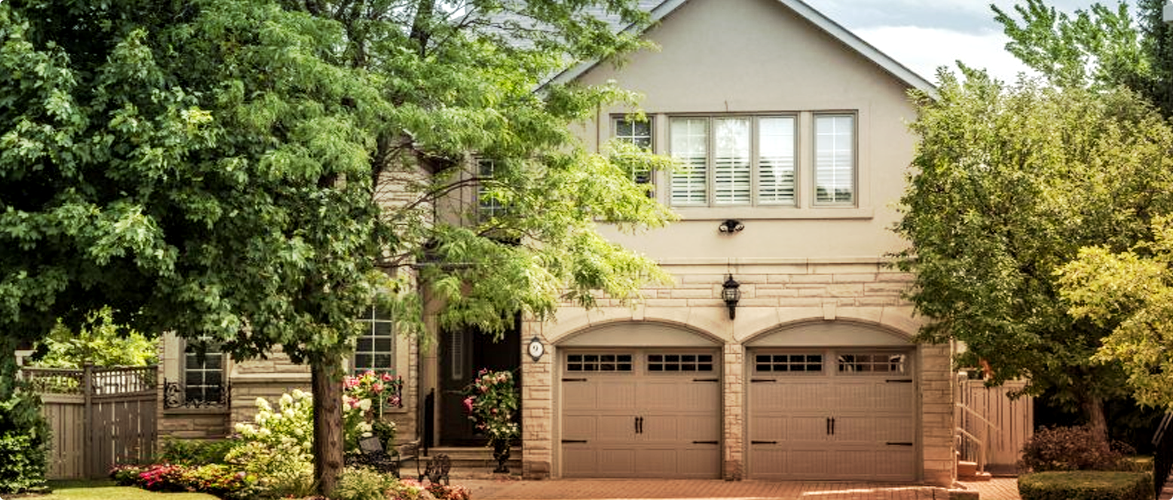
Wilson Heights is a diverse, post-war North York neighbourhood centred on Wilson Avenue and the Allen Road corridor. It offers relative affordability within TTC reach, solid freehold housing with basement suite potential, and an improving trajectory as buyers priced out of more expensive North York areas look further west.
Wilson Heights sits in the middle tier of North York, the kind of neighbourhood that doesn’t appear on lists of Toronto’s most desirable addresses but has always served a practical role and has been improving steadily over the past decade. It’s centred on Wilson Avenue, running roughly between Bathurst Street to the east and the Allen Road corridor to the west, with Wilson subway station as its transit hub and main organizing point.
The neighbourhood’s character is genuinely mixed. Post-war housing, social housing towers, more recent infill, and the commercial strips along Wilson and Bathurst give it a layered quality that reflects its history as a middle-class working neighbourhood built up through the 1950s and 1960s. It has never been polished or exclusive. What it offers instead is relative affordability within TTC reach, solid detached housing stock on decent lots, and an improving trajectory as buyers priced out of more expensive nearby neighbourhoods look further afield.
The Allen Expressway defines the western edge of the area and connects quickly to the 401, making Wilson Heights more accessible by car than some subway-served neighbourhoods. The combination of a subway station and highway access is a practical asset for households where one person commutes by transit and another drives.
Diversity has been a consistent feature here. The neighbourhood has served waves of immigrant communities over its history, and the retail and services along Wilson Avenue reflect that ongoing character. It’s not a neighbourhood built around a single identity or era. That mix can be an asset for buyers who want authentic urban texture rather than a curated address.
Wilson Heights is not fully arrived. There are pockets in varying states of improvement, some streets that feel more stable than others, and blocks that haven’t yet seen the renovation activity that’s reached neighbouring areas. Buyers who do their research and buy carefully can find meaningful value here that isn’t available further south or east along the Yonge corridor.
Wilson Heights housing stock is predominantly post-war detached and semi-detached homes, built out through the 1950s and 1960s on the residential streets north and south of Wilson Avenue. These are solid brick houses, mostly two-storey or storey-and-a-half, on lots that typically run 30 to 40 feet wide. They were built for working and middle-class families and most have been through varying levels of update since original construction. Some have been renovated significantly. Many retain original finishes and have been maintained without major capital work. The range in condition is wide, which means the range in price for nominally similar homes is also wide.
In 2026, a detached home in Wilson Heights in liveable but unrenovated condition typically trades between $950,000 and $1.2 million. A well-renovated detached with an updated kitchen, bathrooms, and mechanical systems can reach $1.3 to $1.5 million on a good lot. These numbers represent meaningful value compared to areas directly to the south and east, where equivalent houses on similar lots command $200,000 to $400,000 more.
Semi-detached homes are present throughout the neighbourhood and offer a lower entry point for buyers who don’t need a full detached. A renovated semi in good condition typically prices between $800,000 and $1.1 million in 2026, depending on location and finish level.
Condo supply near Wilson subway station is limited but growing. Older apartment towers in the neighbourhood are primarily rental rather than ownership, but some conversion and new development near the station has added condominiums to the ownership supply. Prices near the station in purpose-built or converted residential buildings are lower than the Yonge corridor, typically ranging from $500,000 to $750,000 for one- and two-bedroom units.
Basement apartments are extremely common in Wilson Heights. Most detached homes have a lower level that has been or could be converted to a rental unit, which can materially affect carrying costs. Many listings disclose basement apartments already in place, which is a practical consideration for buyers who want the rental income or the multigenerational use.
Wilson Heights moves more quietly than the hotter pockets of North York. It’s not a neighbourhood where multiple-offer situations are routine across all property types at all price points, which gives buyers more room to do proper due diligence. Sellers here tend to have more realistic expectations than in premium-addressed neighbourhoods, and price negotiation is a more normal part of transactions.
That said, the neighbourhood has been gaining attention from buyers who have been priced out of Willowdale, Lawrence Park South, and the more established addresses along Yonge. As that spillover demand increases, the best-positioned properties in Wilson Heights, well-renovated detacheds on wider lots near the station or on quieter residential streets, do attract more competition than they did five years ago. The gap between this neighbourhood and its more expensive neighbours is narrowing, which makes timing a relevant consideration for buyers who are watching the area.
Days on market vary considerably by condition and price positioning. An overpriced and underimproved house can sit for six to eight weeks. A competitively priced and well-presented home moves in two to three weeks, sometimes faster. The market here rewards honest pricing more than aggressive list pricing followed by price cuts.
Rental income potential affects some transactions meaningfully. Buyers who can use a basement apartment income to qualify for a larger mortgage are active in this neighbourhood, and properties with legal or easily legalizable secondary suites get attention from that group. Sellers who have documented their rental income and can provide clarity on the suite’s compliance status tend to see broader interest.
The social housing component of the neighbourhood affects some blocks more than others. Streets or sections adjacent to social housing complexes sometimes see slower movement than equivalent streets elsewhere. Buyers should walk the specific blocks they’re considering rather than relying on neighbourhood-level generalizations.
Wilson Heights attracts buyers who are working within a budget constraint and have decided that freehold ownership in North York matters more than a prestigious address. The typical buyer here is practical and research-oriented, someone who’s looked at what $1.1 million buys in Willowdale East or Bathurst Manor and concluded that Wilson Heights represents better value for the house itself, even if the address doesn’t carry the same recognition.
First-time buyers are a significant part of the market, particularly couples or households stepping up from renting who want a detached home with a yard and basement suite potential in a subway-accessible neighbourhood. The price point makes entry more achievable than in many North York addresses, and the transit connection to downtown removes the need to own or rely on a car.
Immigrants and families with multigenerational living arrangements are consistently present. The neighbourhood’s diversity has long made it a landing area for communities that want affordability without distance from urban services. Families who need space for parents or extended family find the large-footprint post-war homes here well-suited to that use, particularly those with established basement levels.
Investors looking for rental income properties operate in Wilson Heights, drawn by the basement suite potential and the tenant demand generated by Wilson subway station. The neighbourhood’s proximity to York University, Humber College, and Downsview area employment also contributes to rental demand from students and workers who want transit access without downtown rent levels.
What buyers typically give up by choosing Wilson Heights over a more established North York neighbourhood is street-level aesthetics and school prestige. The neighbourhood doesn’t have a secondary school with Earl Haig’s profile, and parts of the neighbourhood have a rougher visual character than comparable-priced alternatives. Buyers who weigh those trade-offs and still choose Wilson Heights are typically making a deliberate calculation about house value and trajectory rather than settling.
The streets closest to Wilson subway station, particularly those within a five-to-ten minute walk, are where buyer interest concentrates. Streets like Viewmount Avenue, Tanhurst Drive, Plaxton Drive, and the residential blocks running north and south off Wilson Avenue near Bathurst offer post-war detacheds that are convenient to transit without sitting on an arterial road. These streets are quieter than Wilson Avenue itself, which carries TTC bus traffic and commercial activity, and they represent the neighbourhood’s most desirable residential pockets.
The blocks north of Wilson Avenue between Bathurst and Dufferin tend to be more residential and less affected by the commercial character of Wilson Avenue itself. Streets in this area, including parts of Flemington Road and the surrounding grid, hold some of the neighbourhood’s better-maintained housing stock and benefit from proximity to the parks and community facilities in the northern part of the area.
Closer to the Allen Road corridor, the noise from the expressway is audible and worth considering for buyers sensitive to traffic sound. Properties on streets immediately adjacent to Allen are impacted. One or two blocks east, the sound diminishes materially. The Allen Road ramps provide convenient car access, which some buyers see as a positive, but the trade-off in street environment is real.
The Bathurst Street commercial strip running through the neighbourhood anchors the eastern edge. The retail here is practical and mixed, serving daily needs without offering much that’s destination-worthy. Properties on Bathurst itself are commercial or mixed-use. The side streets off Bathurst offer residential character with walkable access to the shops and transit on the main road.
Some sections of Wilson Heights include social housing complexes that affect the character of specific blocks. The Firgrove community and surrounding areas have been part of planning discussions for revitalization, but the timeline and scope of changes to those blocks remain uncertain. Buyers should be specific about which streets and which immediate blocks they’re evaluating rather than treating the neighbourhood as homogeneous.
Wilson subway station on Line 1 is the neighbourhood’s transit anchor. From Wilson, trains reach St. George station in roughly fifteen minutes and Union Station in about twenty-five. The station also serves as a major bus terminal for the northwest part of Toronto, with routes heading west along Wilson Avenue, north on Bathurst and Dufferin, and into the York University area. For residents who rely on the TTC for daily travel, this is a well-connected location.
Bus service on Bathurst Street provides north-south connectivity and connects to Lawrence West and York Mills stations for riders needing to transfer or travel horizontally across North York. The 160 Bathurst North bus runs regularly and gives residents a surface option alongside the subway.
The Allen Road expressway connects directly to the 401 in minutes and is one of the faster highway entries for drivers heading downtown via the Gardiner or to the 400-series system for regional travel. Rush hour traffic on Allen southbound can be slow through the Eglinton to Lawrence stretch, but the connection itself is relatively quick compared to surface arterials. For households with a car, the combination of subway and highway access is a practical strength.
Cycling is possible but the neighbourhood lacks well-developed cycling infrastructure. Wilson Avenue carries significant bus and vehicle traffic. Side streets are more comfortable for cyclists, and some connect to trails in the ravine areas to the north. The neighbourhood is not a natural cycling environment, but it’s manageable for experienced urban cyclists making specific trips.
Walkability is moderate. Wilson Avenue and Bathurst Street have the density of services that makes daily errands on foot practical, including grocery stores, pharmacies, banks, and food. The residential side streets are pleasant to walk but have fewer destinations within walking distance compared to more urban corridors further south.
Wilson Heights is reasonably well-served by green space relative to its density. The neighbourhood isn’t as park-rich as parts of North York with deeper ravine systems, but it has several usable parks within walking distance that serve families and residents looking for outdoor space.
Faywood Park, off Faywood Boulevard near the centre of the neighbourhood, is one of the larger local parks. It has open green space, playground equipment, and a skating surface in winter. It’s a practical neighbourhood park rather than a destination, but it serves the surrounding residential streets well.
Wilson Park, near Wilson Avenue, offers open fields and is used regularly for informal recreational activity. The combination of these smaller parks distributed through the residential grid means most houses in the neighbourhood have a park within a five-to-ten minute walk.
Earl Bales Park on Bathurst Street, one of North York’s larger green areas, is at the northern edge of the broader area. It has trails through the Black Creek ravine system, a ski hill that operates in winter, and significant open space. It’s a short drive from Wilson Heights, and residents with cars use it as a larger recreational destination. The Black Creek ravine trail connects south and provides a linear green corridor for walkers and cyclists who want more than a local park.
Downsview Park, to the northwest, is a large federal park on the former Downsview airbase land. It’s one of Toronto’s newer large parks and has been developed with trails, open fields, and event space. It’s not immediately walkable from most of Wilson Heights but is accessible by transit or car. The Downsview Park subway station on Line 1 serves the park directly, which means residents can reach it without a car.
The ravine and creek system in this part of North York provides a green network that extends beyond the formal parks. Black Creek itself runs through the broader area, and trail connections give residents access to more natural walking corridors than the built environment suggests at first glance.
Wilson Heights is not a dining destination neighbourhood, but it functions well for everyday retail and food access. Wilson Avenue is the main commercial spine, running east-west through the area and carrying a mix of independent businesses, chain pharmacies, banks, grocery stores, and food options that serve daily needs competently if not glamorously.
The Bathurst Street commercial strip at the eastern edge of the neighbourhood adds more options, with a concentration of Middle Eastern, Persian, and South Asian restaurants and food shops reflecting the communities that have lived in this corridor for decades. This stretch is particularly well-stocked for residents who cook at home and want access to specific ingredients, spices, and prepared foods from those traditions.
Grocery access is solid. There are several independent and ethnic grocery stores along Wilson and Bathurst that cover everyday shopping needs. For larger or more specialized shopping, Yorkdale Shopping Centre is a short drive west on Wilson Avenue and offers one of Toronto’s better retail concentrations including Whole Foods, major department stores, and extensive food court and restaurant options.
Wilson Heights doesn’t have the restaurant density or culinary range of the Yonge and Sheppard corridor or Midtown Toronto. The dining options here are practical rather than destination-worthy for the most part. Residents who eat out regularly and want variety typically drive or transit to other areas for restaurant dining, which is a realistic expectation for a neighbourhood at this price point and location.
Services including medical offices, dentists, accountants, and legal offices are present in the commercial blocks along Wilson and Bathurst. The neighbourhood functions as a self-sufficient community for everyday needs. What it lacks in food and retail sophistication, it partially compensates for in price and the transit access to other parts of the city where those needs can be met.
The school situation in Wilson Heights is functional without being a major draw for buyers who are prioritizing education in their location decision. The neighbourhood is served by Toronto District School Board schools at the elementary and secondary levels, and by Toronto Catholic District School Board schools for families in the Catholic system.
Flemington Public School serves part of the neighbourhood at the elementary level and has been associated with specific programs over the years. Like all TDSB schools, catchment boundaries and program offerings can change, so confirming the current situation at time of purchase is the right approach rather than relying on outdated information. Parents with specific programming requirements should contact TDSB directly.
At the secondary level, the neighbourhood is served by a combination of schools in the North York area. William Lyon Mackenzie Collegiate Institute, located on Viewmount Avenue within the neighbourhood, is the main public secondary school. It has offered specialized programs including a science and technology focus at various points, though program availability shifts. Buyers with children approaching secondary school age should confirm what programs are currently running and what the application process requires.
On the Catholic side, the Toronto Catholic District School Board operates schools serving this area. St. Robert Catholic School and adjacent secondary options in the TCDSB network serve families in the Catholic system.
Wilson Heights does not have the school reputation draw that some North York neighbourhoods enjoy. Families for whom school reputation is the primary driver in their location decision typically look at areas like Willowdale East or the Lawrence Park catchments before settling on Wilson Heights. That said, the TDSB schools here are operational and have served the neighbourhood’s children adequately through multiple generations. The school situation is a fair trade-off for buyers who get more house for their money here than they would in premium-catchment neighbourhoods.
Wilson Heights is in earlier stages of the development cycle compared to the Yonge corridor neighbourhoods. The most significant nearby development activity centres on the Wilson subway station area, where the city’s transit-oriented development policies are encouraging higher-density residential proposals. Several applications have been filed for mixed-use residential towers near the station, following the same pattern seen around other Line 1 stations where surface parking lots and underused commercial properties are being proposed for redevelopment.
The Downsview area immediately to the northwest has been a major development story over the past decade. The former Bombardier and de Havilland aircraft lands, now part of the Downsview Park area, have been subject to significant planning work and development proposals that include thousands of new residential units. That growth, while not directly within Wilson Heights, puts upward pressure on the surrounding area and increases the neighbourhood’s position as an affordable adjacent option for buyers who can’t get into Downsview’s newer stock.
The social housing complexes within Wilson Heights have been part of revitalization discussions for years. The city and Toronto Community Housing Corporation have plans at various stages for several sites in this part of North York. The Lawrence-Allen Revitalization Plan, centred more directly on Lawrence Heights to the south, has informed broader thinking about how to approach mixed-income redevelopment in this part of the city. How and when those plans translate into action on specific Wilson Heights sites is uncertain, but the direction of change in the area is toward more mixed-income and mixed-density development over time.
Private infill activity, including custom home rebuilds on the neighbourhood’s residential streets, has been picking up. The relatively affordable land prices in Wilson Heights compared to areas further south make the economics of a teardown-rebuild more accessible, and several streets have seen new construction replace older bungalows in recent years. This trend is likely to continue as land prices across North York continue to rise.
Is Wilson Heights safe? The neighbourhood has a mixed reputation, and it’s worth being direct rather than evasive about that. Some parts of Wilson Heights, particularly streets adjacent to social housing complexes, have historically had higher rates of reported incidents than the neighbourhood average for North York. Other streets, particularly the quieter residential blocks well away from those complexes, are entirely typical of working Toronto neighbourhoods. The answer depends significantly on which specific streets and blocks you’re considering. Walking the neighbourhood at different times of day, including evenings, is more useful than relying on neighbourhood-level statistics. Buyers who research at the street level rather than the postal code level consistently make better decisions here.
What does the basement apartment situation actually look like? Most post-war detached homes in Wilson Heights have basements that have been converted to rental units or are convertible. Many of these suites are not fully compliant with current City of Toronto requirements for secondary suites. Whether a suite is legal, technically illegal but tolerated, or genuinely problematic depends on factors including separate entrance, egress windows, ceiling height, and whether it was registered with the city. A buyer’s agent and a home inspector can help you understand the status of a specific suite. The income is real and can be $1,500 to $2,000 per month in many cases, but you should enter with accurate information about what the unit’s status actually is.
How far is Wilson Heights from downtown? Wilson subway station to Union Station by subway takes approximately 25 to 30 minutes with transfers. To Bloor and Yonge, roughly 20 minutes. These are acceptable commutes by Toronto standards, and the connection is direct on Line 1 without requiring transfers for most downtown destinations. The 401 by car is a few minutes away via Allen Road. Total travel time to the downtown core by car during peak hours is longer, typically 35 to 50 minutes depending on conditions.
Is Wilson Heights improving as a neighbourhood? The trajectory is upward but gradual. The area has been in a slow improvement cycle for about a decade, driven partly by buyers being priced out of more expensive North York neighbourhoods. Renovation activity has increased. New businesses have opened along Wilson and Bathurst. Development near the subway station is adding new residential supply and activity. That said, the neighbourhood has not yet gone through the sharp price appreciation cycle that transformed areas like Weston-Mount Dennis or Caledonia-Fairbank. Whether that acceleration happens depends on continued price pressure from the south and east, and on how quickly the social housing revitalization plans on specific sites advance.
Buying in Wilson Heights rewards buyers who do careful, block-level research rather than neighbourhood-level generalization. The range of street quality within the neighbourhood is wider than in more homogeneous areas, which means the difference between a well-chosen purchase and a poorly-chosen one is larger here than in, say, Willowdale East or Bayview Village. Your buyer’s agent should be walking the specific streets with you and giving you an honest read on the micro-location, not just the broader neighbourhood.
Due diligence on secondary suites is important in this neighbourhood more than most. Many listings disclose existing basement apartments, and many more have basement levels that have been used as rentals without formal disclosure. You need to understand what you’re buying: a legal secondary suite, a suite that exists but isn’t compliant with current standards, or a space that’s been used as a rental but requires work before it can generate income. Have a home inspector who understands secondary suite requirements assess any basement level you’re planning to use or rent. A real estate lawyer should review any disclosure related to rental income and advise on the city’s requirements.
Home inspection is non-negotiable in this neighbourhood. The post-war housing stock here was built well in many cases, but it’s old, and deferred maintenance is common. Knob-and-tube wiring, galvanized water supply pipes, original cast iron drain stacks, and inadequate attic insulation are all present in the neighbourhood’s housing stock. A thorough inspector who takes the time to assess the mechanical, electrical, and structural condition of the house will give you a realistic picture of what ownership will cost beyond the purchase price. Skipping this step in a competitive situation is a meaningful risk in a neighbourhood where renovation surprises can be significant.
The Allen Road noise question deserves direct attention for any property within a few blocks of the expressway. Visit the property on a weekday morning and afternoon before finalizing a decision. The noise level varies considerably by time of day and by wind direction, and what sounds acceptable on a quiet Sunday may not be acceptable at 7:30 on a Tuesday morning when you’re trying to work from home.
Street-level knowledge is hard to find online. Our team works in Wilson Heights every day. They know which pockets hold value, where the school catchment lines actually fall, and what the market is doing right now. Talk to us before you make a decision about Wilson Heights.
Talk to a local agent