
Brampton is a city of about 790,000 people directly north of Mississauga and Pearson airport. Buyers come up Highway 410 for a four- or five-bedroom house at about half the Toronto price, in the youngest of Canada's big cities and the one with the largest households. The train from Bramalea reaches Union in under 40 minutes. Current Brampton listings are further down this page.
Brampton sits north of Mississauga and northwest of Toronto, with Caledon above it along Mayfield Road, Vaughan across Highway 50 to the east and Halton Hills to the west. Pearson airport is just over the southern boundary. The city covers about 266 square kilometres, a little less than Mississauga, and the 2021 census counted 656,480 people, up more than 10 percent in five years. Statistics Canada’s estimate had passed 790,000 by 2024.
It became a city in 1974 by joining the old town of Brampton with most of Chinguacousy and Toronto Gore townships. The town had been a village since 1853, and for most of the twentieth century it grew flowers: the Dale Estate ran about 140 greenhouses and was the town’s biggest employer, and the city still calls itself the Flower City. Bramalea, east of the old town, was laid out from the late 1950s as a planned satellite city with its own town centre.
The 2021 census put Brampton’s average age at 37.5, the lowest of Canada’s 10 largest cities, and its average household at 3.6 people, the highest of the 15 largest. Just over half of residents were born outside Canada, and South Asians make up 52 percent of the population.
A Brampton freehold runs about half the Toronto figure; a condo, about a quarter below it. Against Mississauga next door, a house costs about a third less and a condo roughly an eighth less. Beside this text, the city’s current figures update each day.
It isn’t one market. Toronto Gore Rural Estate in the northeast corner prices above the Toronto freehold average, and Vales of Castlemore, Credit Valley and Bram West are the dearest subdivisions. The cheapest places to buy are the condo corridors along Queen Street East and Goreway Drive, and the postwar streets of Brampton South and Brampton North.
Houses outnumber condos for sale in Brampton by about four to one. In Toronto the ratio runs the other way. The four-bedroom detached is the single most common house on the market, and five-bedroom houses outnumber three-bedrooms. Four bedrooms run about a sixth above three, and five bedrooms about 40 percent above.
The oldest houses are the bungalows and side-splits of the 1950s and 1960s around the old town in Brampton North, Brampton South, Brampton East and Madoc, on the widest lots in the city. Bramalea’s sections, built through the 1960s and 1970s, have the detached and semi-detached houses of that era on crescents where every street name in a section starts with the same letter. Heart Lake and Northwood Park are 1980s. Fletcher’s Meadow, Springdale and the Vales of Castlemore filled in through the 1990s and 2000s with the large two-storeys, double garages and finished basements that most buyers picture when they picture Brampton. Northwest Brampton, Credit Valley and Bram West are the newest.
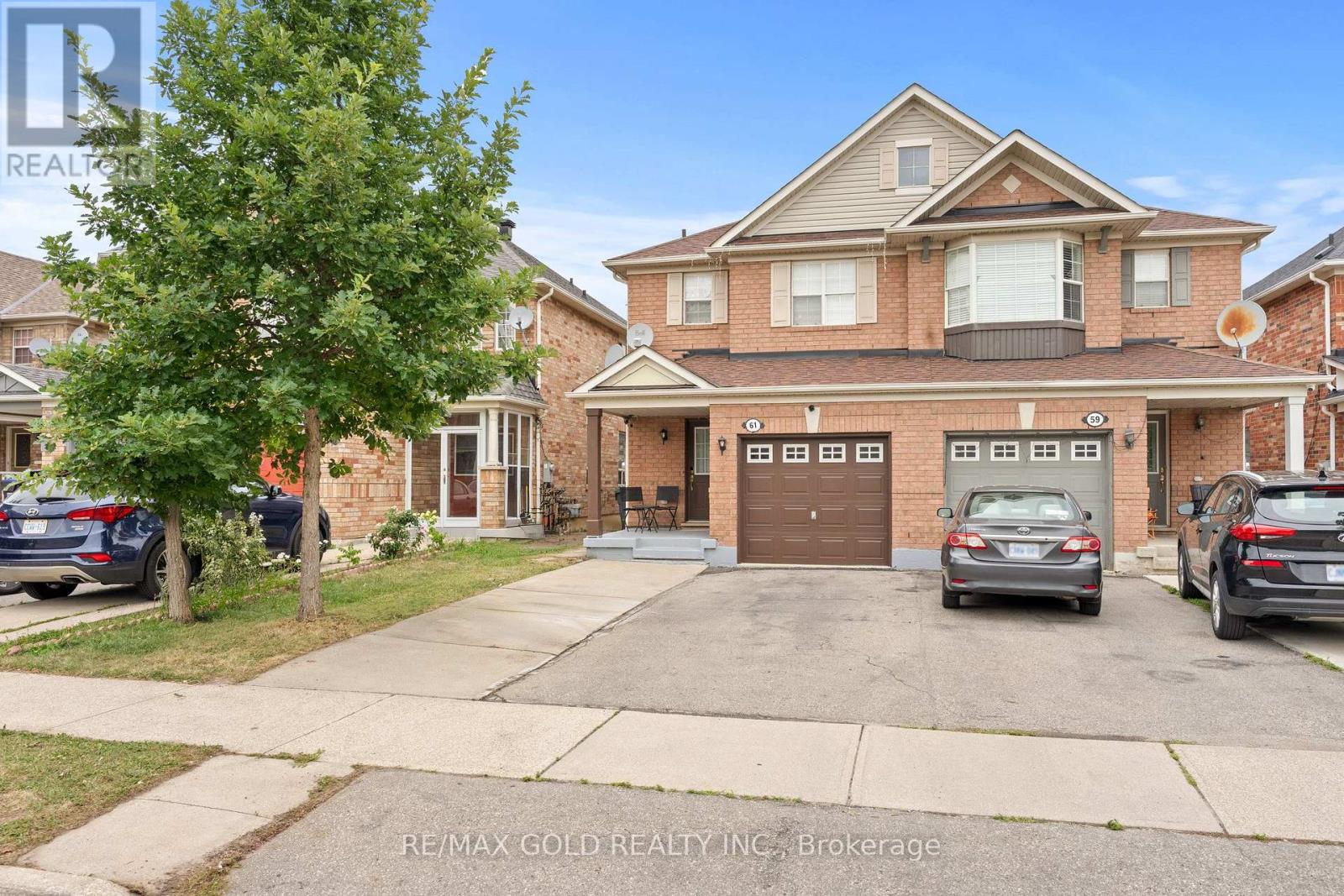
Semis and freehold townhouses are a large part of the subdivisions built after 1995, and they’re how a buyer gets into Fletcher’s Meadow or Sandringham-Wellington below the detached price. Condominium townhouses, where a corporation owns the common ground and charges a monthly fee, sit along the arterials. Most four-bedroom condominiums for sale in Brampton are one of these. Read the fee before you compare it with a freehold at the same price.
Condominium apartments cluster along Queen Street East between downtown and Bramalea, around Hurontario and Steeles, along Goreway Drive by the Mississauga border, and in a handful of downtown buildings. Three-bedroom condos slightly outnumber two-bedrooms here, which is unusual in the GTA, and a one-bedroom condo is the cheapest home you can buy in the city. A two-bedroom condo costs about 60 percent of a three-bedroom house.
Brampton registers second units, and a house with a registered basement apartment, a separate side entrance and a second kitchen is a common listing in the 1990s and 2000s subdivisions. If a listing counts rent from the basement, ask to see the registration.
Renting is the other way in. Houses for rent outnumber condos for rent by about five to one, and a house’s average asking rent is no higher than a condo’s. Many of those house listings are a basement apartment or one floor rather than the whole house. Read the listing before you compare rents. Anyone coming from Toronto who wants a year to learn the city can see current asking rents, neighbourhood by neighbourhood, in the rental listings.
Brampton’s prices move in step with Toronto’s. Interest rates and lending rules don’t change at the 407, so the figure to watch is the gap between them, about half on a freehold house today. If it narrows, the discount that brought you up the 410 is shrinking.
The freehold market is a family market, so it runs on the school calendar. Houses in Fletcher’s Meadow, Springdale and Castlemore list from late February into June and again from September to November, and the market thins out over the summer holidays and from mid-December into January. A buyer in late July or early January sees fewer houses and has more room to negotiate.
Sandringham-Wellington, Northwest Brampton and Fletcher’s Meadow have more houses for sale than any other neighbourhoods in the city, so a buyer there can compare several similar houses on the same weekend. In Northwest Brampton the competition for a resale house includes the builders still selling new ones a few streets away. Ask what the builder is asking for the same floor plan before you offer on a resale.
The estate market in Toronto Gore is its own thing. Houses there sit on acreage and price on the land as much as the building, and the pool of buyers for a two-acre lot is small. Expect them to take longer to sell and longer to buy.
The condo market is small and concentrated. Queen Street East between Kennedy Road and Bramalea Road has more condos for sale than any other part of the city and the lowest averages, so a buyer there can take time. Which condos are near rail will change with the Hazel McCallion LRT, due to reach Brampton Gateway Terminal at Steeles and Hurontario in 2028, and with the tunnel the province has promised from there to downtown. The LRT has a date. The tunnel doesn’t, so don’t pay for it yet.
Brampton’s buyers, to a large extent, already live in Brampton or next door in Malton and Etobicoke. Children who grew up in Bramalea buy in Springdale. Parents sell the Heart Lake house and move in with a son’s family in Castlemore. The city has the largest households of any big city in Canada, and the houses match: more five-bedrooms for sale than three-bedrooms, and a side entrance to the basement on a lot of buyers’ lists.
Just over half of residents were born outside Canada, and the Punjabi and wider South Asian community has its own groceries, banquet halls, temples and gurdwaras along Queen Street East, Airport Road and Steeles. Many buyers are moving closer to family who are already here. Brampton also has large Caribbean and Filipino communities.
Buyers from Toronto come for a house at half the price, and the trade is the drive. Outside downtown, you drive to everything. Shops sit in plazas on Queen, Bovaird and Steeles, and many households run two cars. The train from Bramalea or Brampton Innovation District to Union takes about 40 minutes, so a downtown job is workable. A job at Pearson, in the warehouses along the 407, at Loblaw’s head office or at the hospital is a short drive.
Brampton is also where many newcomers to Canada buy a first home, often with a registered basement apartment carrying part of the mortgage. Brampton North, Brampton South, Madoc and the Bramalea sections have long been first-purchase neighbourhoods, and the Queen Street condo corridor is the cheapest way in.
This site has a page for 27 Brampton neighbourhoods. Here they are, starting from the old town and working outward.
Downtown Brampton is the Victorian core at Queen and Main, with the Rose Theatre, Gage Park, the 1907 GO station, Algoma University and a mix of century houses and newer condos. Brampton North, above downtown along Kennedy Road and Main Street North, has 1950s to 1970s bungalows and semis and some of the lowest averages in the city. Brampton South runs down Main Street toward Steeles and Shoppers World and has the lowest averages of the old-town neighbourhoods, pulled down by the condo towers near Steeles. Along Williams Parkway and McLaughlin Road, Brampton West is 1970s and 1980s family houses at a price below the city average. Between downtown and Bramalea, Brampton East is older detached houses that trade close to the city average.
Bramalea is the planned community east of the 410. Avondale is its southern section, 1960s houses on lettered crescents near Chinguacousy Park, below the city average. Madoc, north of Williams Parkway, has 1960s and 1970s bungalows and semis on wide lots, below the city average. Goreway Drive Corridor in the southeast corner by Malton is mostly condo towers and townhouses, and after Queen Street it’s the cheapest place in the city to buy. Gore Industrial North and Bramalea North Industrial are employment lands along Airport Road and Bramalea Road with a scattering of houses at their edges.
North along the 410, Heart Lake West and Heart Lake East are the 1980s and 1990s subdivisions either side of the highway below the Heart Lake Conservation Area, priced near the city average. Heart Lake is the small older pocket by the lake itself. Snelgrove at Hurontario and Mayfield is the old hamlet with large 1990s and 2000s houses around it, and one of the dearer neighbourhoods.
The northeast is the newest and biggest part of the city. Sandringham-Wellington, which everyone calls Springdale, has more houses for sale than any other neighbourhood in Brampton: 1990s and 2000s two-storeys around Brampton Civic Hospital. Sandringham-Wellington North above it is newer and a little dearer. Vales of Castlemore and Vales of Castlemore North along Airport Road and Castlemore Road are the large 2000s houses on wide lots that make up the city’s most expensive subdivisions along with Credit Valley. Toronto Gore Rural Estate beyond them is estate lots on the old township concession roads, the only part of Brampton priced above the Toronto freehold average. Bram East along The Gore Road and Highway 50 is 2000s and 2010s detached houses and townhouses, above the city average.
West of the old town, Northwood Park is 1980s houses around Chinguacousy Road, priced near the city average. Fletcher’s West along Queen Street West is 1990s two-storeys. Fletcher’s Meadow, north of Bovaird between Chinguacousy and Creditview, is the big 1990s and 2000s subdivision where a Toronto family looking for a four-bedroom under the city average should start; Northwest Sandalwood Parkway above it is the same era a few years newer.
Northwest Brampton is Mount Pleasant and the streets west of Creditview to Mississauga Road, the newest houses in the city around Mount Pleasant GO, and after Springdale the neighbourhood with the most for sale. Credit Valley, along the Credit River west of Chinguacousy, has large 2000s and 2010s houses on the ravine and prices well above the city average. Bram West in the southwest corner at Mississauga Road and Steeles is the other high-priced newer area. The employment lands and power centres between it and the toll road have their own page, Brampton 407 Corridor.
Every neighbourhood page goes into the streets, schools and transit in detail and lists what has sold there.
One GO line serves the city. The Kitchener line stops at Bramalea, Brampton Innovation District downtown and Mount Pleasant in the northwest. Bramalea has had trains every 30 minutes all day in both directions since April 2024, and the ride to Union takes 37 to 39 minutes. Downtown and Mount Pleasant get hourly trains both ways outside the weekday peaks, up to three an hour toward Union in the morning rush, and downtown to Union takes about 43 minutes. On weekends, trains have run every 30 minutes between Union and Bramalea since November 2025, and hourly to Mount Pleasant.
Bramalea gets more trains than downtown because of who owns the track. Metrolinx owns the line as far as Bramalea; CN owns it from Bramalea to Georgetown and runs freight on it, so the freight caps how many passenger trains run west of Bramalea. Metrolinx reached an agreement with CN in October 2025 to build 40 kilometres of dedicated GO track west of Georgetown, and its stated goal is 30-minute two-way service to Mount Pleasant seven days a week, with no date. If you’re buying in Mount Pleasant for the train, plan around the hourly service you’d get today.
Highway 410 is the spine of the city, running from the 401 and 407 in the south to Mayfield Road in the north. The 407 toll road runs along the southern edge, and Highway 50 forms the eastern one. Highway 413, a 52-kilometre 400-series highway from the 401 and 407 in Halton Hills across north Brampton and Caledon to the 400 in Vaughan, has been under construction since August 2025. The province asked for proposals in December 2025 to extend the 410 north to meet it. The 410 southbound into the 401 is the slow part of any morning drive downtown.
Brampton Transit’s Züm routes are the limited-stop rapid buses on Queen Street, Main Street, Steeles and Bovaird, and the 501 Züm Queen runs east along Highway 7 to the subway at Vaughan Metropolitan Centre. Metrolinx has proposed a 24-kilometre busway along Queen Street and Highway 7 to give those buses their own lanes.
The Hazel McCallion LRT will run 18 kilometres up Hurontario Street from Port Credit GO to the Brampton Gateway Terminal at Steeles, now expected in 2028. The province has promised to carry it on underground to downtown Brampton, with no construction date.
Brampton has no lakefront, so its green space is its creeks and the conservation areas on them. Heart Lake Conservation Area in the north of the city, a Toronto and Region Conservation Authority property, is 169 hectares around the kettle lake that gives the Heart Lake neighbourhoods their name, with a beach-entry pool, a stocked trout lake, an aerial ropes course and trails through the woods. Claireville Conservation Area on the west branch of the Humber River, straddling the Vaughan border in the east, is 343 hectares, with a reservoir and riding trails.
The Credit River runs down the west side of the city through Credit Valley and Bram West. Eldorado Park on its banks, off Creditview Road, has the city’s only outdoor pool. Etobicoke Creek runs through the middle, past Heart Lake, through downtown and out toward the airport.
Gage Park downtown opened in 1903, is the city’s oldest park, and has an outdoor skating trail. Donald M. Gordon Chinguacousy Park in Bramalea is 40 hectares with a ski hill, a curling rink, a petting zoo, a greenhouse, the Terry Fox stadium and a canal-style skating trail that becomes a fountain in summer. Professor’s Lake, between Bramalea and Springdale, is a 26-hectare spring-fed former gravel pit with a sandy beach, sailing and paddle boats, and the houses that ring it are some of the few in Brampton with water at the end of the garden.
Bramalea City Centre at Queen Street East and Dixie Road opened in 1973 and has more than 300 stores in 1.5 million square feet, the largest mall in the city. Trinity Common at Bovaird and the 410 is the big-box power centre of 850,000 square feet, and Shoppers World at Steeles and Main is the 1969 mall that RioCan plans to replace with housing. Downtown’s Queen and Main streets have the independent restaurants and the Rose Theatre.
The city’s food is in its plazas. Queen Street East, Airport Road, Steeles and Bovaird are lined with South Asian restaurants, sweet shops and grocers, and Caribbean and Filipino restaurants and bakeries cluster around the communities that run them.
William Osler Health System runs the hospitals. Brampton Civic Hospital at Bovaird and Bramalea Road opened in 2007 with 608 beds, and its emergency department sees around 350 patients a day. Peel Memorial on Lynch Street downtown has an urgent care centre today. Its second phase, a 12-storey tower with up to 250 inpatient beds and a 24-hour emergency department, began early construction in spring 2025, and a builder was signed in October 2025 to set its design, schedule and price. There’s no opening date, and the city’s 2026 budget added a one percent property tax levy toward it.
Most of the city’s jobs are inside the city or next door. Loblaw’s head office is in Brampton. Amazon runs several fulfilment centres here, Rogers has a large campus, MDA Space builds satellite hardware, and Pearson and the logistics belt along the 407 and 410 employ thousands more. The Stellantis assembly plant on Williams Parkway has been idle since December 2023 with more than 2,200 workers on layoff, and in September 2026 Stellantis signed a memorandum of understanding with the armoured vehicle builder Roshel on a possible sale.
Two English boards cover Brampton: the Peel District School Board for public schools and the Dufferin-Peel Catholic District School Board for Catholic ones. Both offer French immersion at designated schools, and the French-language boards, Viamonde and MonAvenir, each have schools in the city.
Turner Fenton Secondary on Kennedy Road and Harold M. Brathwaite in Springdale run the International Baccalaureate, and Chinguacousy Secondary in Bramalea runs the SciTech program. Mayfield Secondary, just across Mayfield Road in Caledon, is the regional arts school for the north of the board. Those regional programs pick students by application from the whole board, so a house next to one brings no place in it. Families ask about Heart Lake Secondary, Brampton Centennial and the newer schools in Mount Pleasant and Castlemore. On the Catholic side, St. Thomas Aquinas runs the board’s Regional Arts Program, and families look at Cardinal Leger downtown, Notre Dame, Cardinal Ambrozic in Castlemore and Holy Name of Mary, the all-girls school on the former Glenvale campus.
Boundaries are drawn by the board and redrawn when a new school opens, and in a city that added more than 100,000 people between the 2011 and 2021 censuses, they get redrawn often. Run the address through both boards’ lookups, compare the result with what the listing claims, and ask whether the school is at capacity.
Sheridan College’s Davis campus on McLaughlin Road is the college’s largest, with about 8,900 full-time students in health, engineering and technology programs. Algoma University has a downtown campus of about 2,000 students on Queen Street. Toronto Metropolitan University opened its School of Medicine in September 2025 in the former Bramalea Civic Centre on Central Park Drive, the first new medical school in the GTA in more than a century, with a primary care clinic on site. If you’re buying near any of the three, expect student rentals on the street.
The Hazel McCallion LRT reaches Brampton at the Gateway Terminal on Steeles in 2028, and the province’s January 2025 decision to tunnel it four kilometres north to downtown is the biggest change coming to the city’s transit. Metrolinx is studying the route and how to connect it to the Innovation District GO station. The federal government said in March 2025 that it intends to fund part of it, and the province attaches 33,000 homes and 17,000 jobs to the extension over its life. There’s no construction date and no opening year.
Riverwalk is the city’s project to widen and deepen Etobicoke Creek through downtown, replacing the bridges at Church, Scott and Queen streets and moving Ken Whillans Drive. Phase one construction started in spring 2026 and runs to spring 2028. The point of it is the flood plain: downtown Brampton has been under a flood designation that limits what can be built, and the city is working with the province and the conservation authority on when building can start.
Shoppers World at Steeles and Main is RioCan’s 53-acre redevelopment of the 1969 mall into roughly 5,000 homes, new streets and a park, approved in 2020 and in site plan review for its first phase. Full build-out is projected for 2040. It sits beside the LRT terminus.
Highway 413 is under construction across the north of the city, and the 410 extension to meet it is at the proposal stage. Peel Memorial’s 250-bed tower has a builder but no opening date. A buyer who wants in before any of it finishes should look at downtown, Brampton South and the Hurontario corridor, where the LRT, Riverwalk and Shoppers World all land.
Is Brampton cheaper than Toronto?
Yes, by about half for a freehold house and about a quarter for a condo. The reason is what’s being sold: Brampton’s standard house is a four- or five-bedroom detached built after 1990 with a double garage and a finished basement, and that house doesn’t exist in Toronto at anything near the price. Condos show a narrower gap because Brampton has few of them and most are older buildings along Queen Street East, so you’re comparing an older two-bedroom with a maintenance fee against a Toronto market full of newer towers. The gap closes in one place: Toronto Gore Rural Estate, where houses sit on acreage and price above the Toronto average.
Property tax here is set by the city and the Region of Peel together, and the combined 2026 increase was 4.31 percent, about $73 on the average house. It’s made up of a Peel Region increase, a zero percent change on the city’s own portion and a one percent levy for the new hospital. And many Brampton households run two cars, because outside downtown you drive to the shops. Put both into the budget before you compare mortgages. Current prices for the city and its neighbourhoods are on their pages and change every day.
How long is the commute from Brampton to downtown Toronto?
About 37 to 39 minutes by train from Bramalea GO, about 43 minutes from Brampton Innovation District downtown, and longer again from Mount Pleasant at the end of the line. Bramalea is the station to buy near if the train matters, because Metrolinx owns the track from there to Union and runs trains every 30 minutes all day in both directions on weekdays, and every 30 minutes on weekends since November 2025. West of Bramalea the track belongs to CN and carries its freight, so downtown Brampton and Mount Pleasant get hourly trains outside the peaks, with up to three an hour toward Union in the morning rush. Metrolinx’s stated goal is 30-minute two-way service to Mount Pleasant seven days a week, and it reached a deal with CN in October 2025 to build 40 kilometres of separate GO track west of Georgetown, but there’s no date for either.
If you drive, the 410 south into the 401 is the bottleneck at 8am, and from Castlemore or Bram East the route is Highway 50 or the 427 and then the 401 or the Gardiner. Brampton Transit’s 501 Züm Queen runs east along Highway 7 to the subway at Vaughan Metropolitan Centre, which is the way into Toronto for anyone heading to York University or the north end of the city rather than downtown.
Which Brampton neighbourhoods are best for families?
Families pick Fletcher’s Meadow, Sandringham-Wellington, Northwest Brampton, Heart Lake and the Vales of Castlemore, and the reasons are the same in each: a four- or five-bedroom detached built since 1990, a school within walking distance, a recreation centre with a pool, and crescents with no through traffic. Fletcher’s Meadow and Sandringham-Wellington, which locals call Springdale, have the most of that kind of house for sale and trade below the city average, so they’re where a Toronto family should start. Springdale has Brampton Civic Hospital, Trinity Common and Harold M. Brathwaite Secondary with its IB program on its doorstep. Northwest Brampton around Mount Pleasant GO is newer again, with a civic square at the station and school boundaries that move as new schools open, at a price close to Springdale’s. Heart Lake West and Heart Lake East are the quieter 1980s and 1990s option below the conservation area, with the trails and the pool at the end of the street.
The premium version is the Vales of Castlemore, with the largest houses and lots in the city’s subdivisions at about 60 percent more than Fletcher’s Meadow. In a city growing this fast, catchments move, and the neighbourhood name tells you little; run the exact address through each board’s lookup, and ask whether the school is full. Families with a smaller budget look at Madoc, Avondale and Brampton West, where a 1960s or 1970s detached on a wide lot sits well below the city average.
Is Brampton a good place to buy a first home or a condo?
It’s one of the cheapest places in the GTA to buy a first home, and the first home here is more often a small house or a townhouse than a condo. A one-bedroom condo on Queen Street East is the cheapest home in the city, and a two-bedroom there costs about 60 percent of a three-bedroom house. Many of those buildings are older towers with maintenance fees to match, so read the status certificate, work out the fee per square foot and compare it with the buildings on either side before you offer. Condo townhouses along the arterials and in Goreway Drive Corridor are the next step up, then a 1960s semi in Avondale or Brampton North.
The basement apartment is what makes Brampton different for a first buyer. The city registers second units, and a house with a registered basement apartment lets a first buyer carry a mortgage that wouldn’t otherwise work. Ask for the registration, not the listing agent’s word, and check that the entrance, the ceiling height and the fire separation were inspected. As an investment, condos here are a harder case than houses: the stock is older, supply will grow around the LRT terminus and downtown as Shoppers World builds out, and a condo competes for tenants with the basement apartments in every subdivision. Many Brampton first buyers go the other way, into a small house with a registered unit, and the listings show plenty of them.
A Toronto agent can read a Brampton listing and still miss what sets its price. They won’t know that Bramalea gets a train every 30 minutes while Mount Pleasant waits on CN, that a Northwest Brampton resale is competing with a builder a few streets over still selling new, or that the LRT stops at Steeles in 2028 and the downtown tunnel has no date at all.
The agent we refer Brampton buyers to knows all three and prices houses accordingly. Ask them for a five-bedroom with a registered second unit within a short drive of Bramalea GO, or a Queen Street East condo whose fee and reserve fund stand up against the building next door. They’ll check the second-unit registration, pull the builder’s current price list, and show you what the street has sold for in the last year.
The 27 neighbourhood pages above are where to start. Once you’ve narrowed it down, get in touch, and we’ll introduce you to that agent.
Street-level knowledge is hard to find online. Our team works in Brampton every day. They know which pockets hold value, where the school catchment lines actually fall, and what the market is doing right now. Talk to us before you make a decision about Brampton.
Talk to a local agent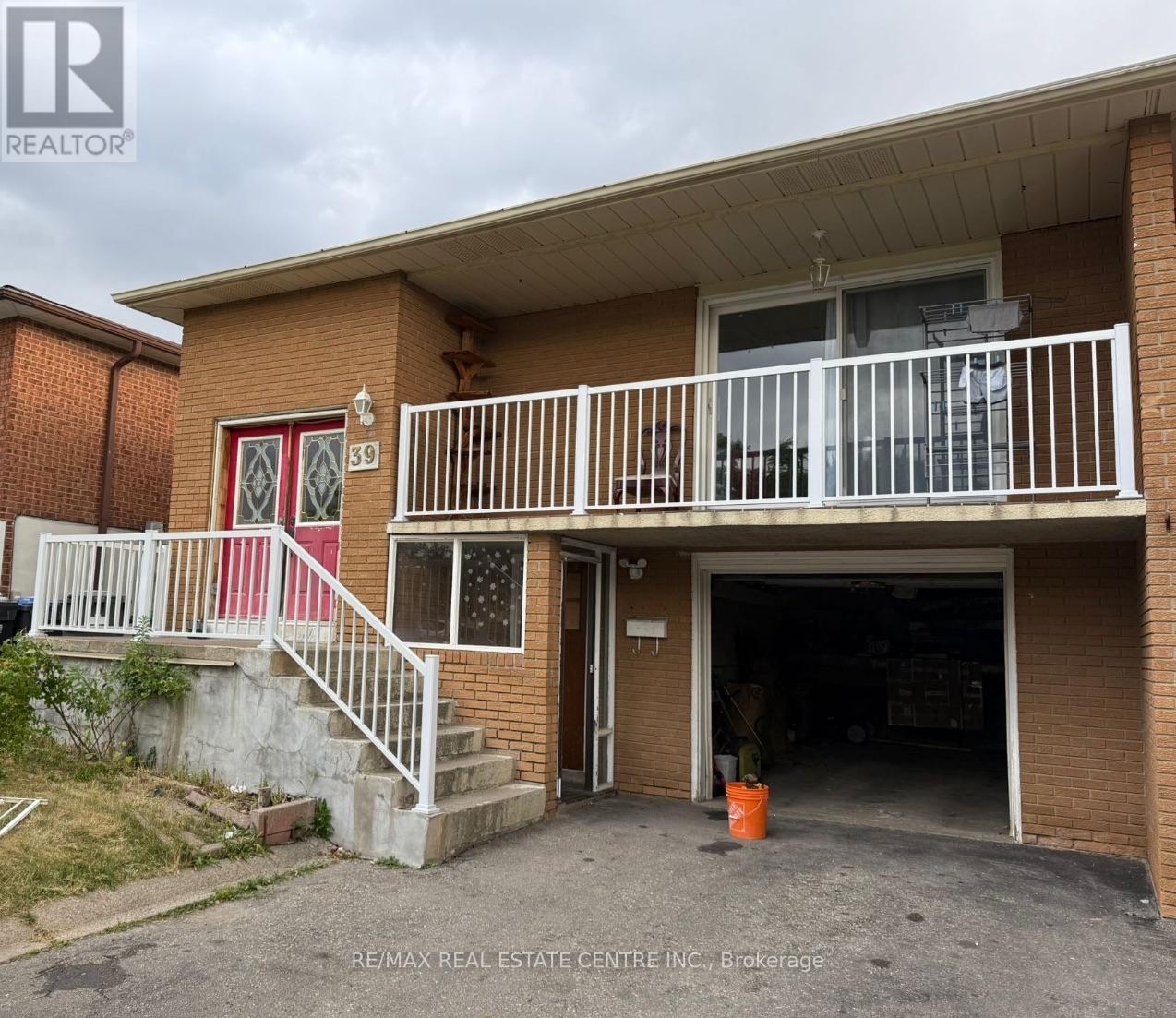 For Rent
 For Sale
 For Sale
 For Sale